How to Design an Ecommerce Website for UK Retail Brands
More than 80 percent of British shoppers expect a seamless online experience when browsing their favorite UK retail brands. For ecommerce managers, this creates both pressure and opportunity. Success relies on a sharp focus—defining your goals, clarifying project requirements, and building the right platform with Magento or Shopify. This guide reveals how leading British retailers stay ahead by crafting tailored site journeys, integrating advanced B2B tools, and validating every aspect for flawless performance.
Table of Contents
- Step 1: Define Project Goals And Brand Requirements
- Step 2: Plan User Journeys And Wireframes In Figma
- Step 3: Build The Site Using Magento Or Shopify
- Step 4: Integrate Advanced B2B Features And Tools
- Step 5: Verify Performance, Security And Conversion
Quick Summary
| Key Insight | Explanation |
| 1. Define clear project goals | Establish precise objectives to align your ecommerce site with business aims and customer expectations. |
| 2. Plan user journeys carefully | Use tools like Figma to create logical pathways that guide users through their shopping experience. |
| 3. Choose the right platform | Select between Magento and Shopify based on customisation needs, scalability, and technical resources available. |
| 4. Integrate advanced B2B capabilities | Include features such as tiered pricing and account hierarchies to facilitate complex business transactions. |
| 5. Conduct rigorous performance testing | Regularly check and enhance site security, functionality, and conversion rates to ensure a reliable user experience. |
Step 1: Define project goals and brand requirements
Defining clear project goals represents the foundational blueprint for your UK retail brand’s ecommerce website. This critical initial phase determines the strategic direction and ensures your digital platform aligns precisely with your business objectives and customer expectations.
The process begins with comprehensive stakeholder interviews and thorough market research to unpack your specific retail brand requirements. Understanding your project’s strategic scope involves deep analysis of several key dimensions. You will need to articulate specific goals such as increasing online sales volume, enhancing brand visibility, improving customer engagement metrics, or expanding your digital market reach within the competitive British retail landscape.
Start by documenting your precise commercial objectives alongside detailed customer persona profiles. Consider factors like target demographic, purchasing behaviours, preferred online shopping experiences, and technological comfort levels. Your website design must reflect not just aesthetic preferences but also functional requirements that speak directly to your ideal customer segments. This means mapping out user journeys, identifying critical conversion touchpoints, and ensuring your digital platform delivers a seamless, intuitive shopping experience that reflects your brand’s unique value proposition.
Insider Tip: Create a detailed project brief that includes both quantitative goals (sales targets, conversion rates) and qualitative objectives (brand perception, user experience) to provide a holistic framework for your ecommerce website development.
Step 2: Plan user journeys and wireframes in Figma
Planning user journeys and wireframes represents a strategic blueprint for creating an intuitive and engaging ecommerce website experience. This critical design phase translates your brand objectives into a visual roadmap that guides users seamlessly through their online shopping interaction.

User journey mapping in Figma enables retail brands to systematically visualise how potential customers will navigate their online platform. Start by developing comprehensive user personas that accurately reflect your target demographic. Consider their motivations, technological comfort levels, and specific shopping behaviours. Map out each potential interaction point from initial product discovery through to final purchase completion tracking the emotional and functional requirements at each stage.
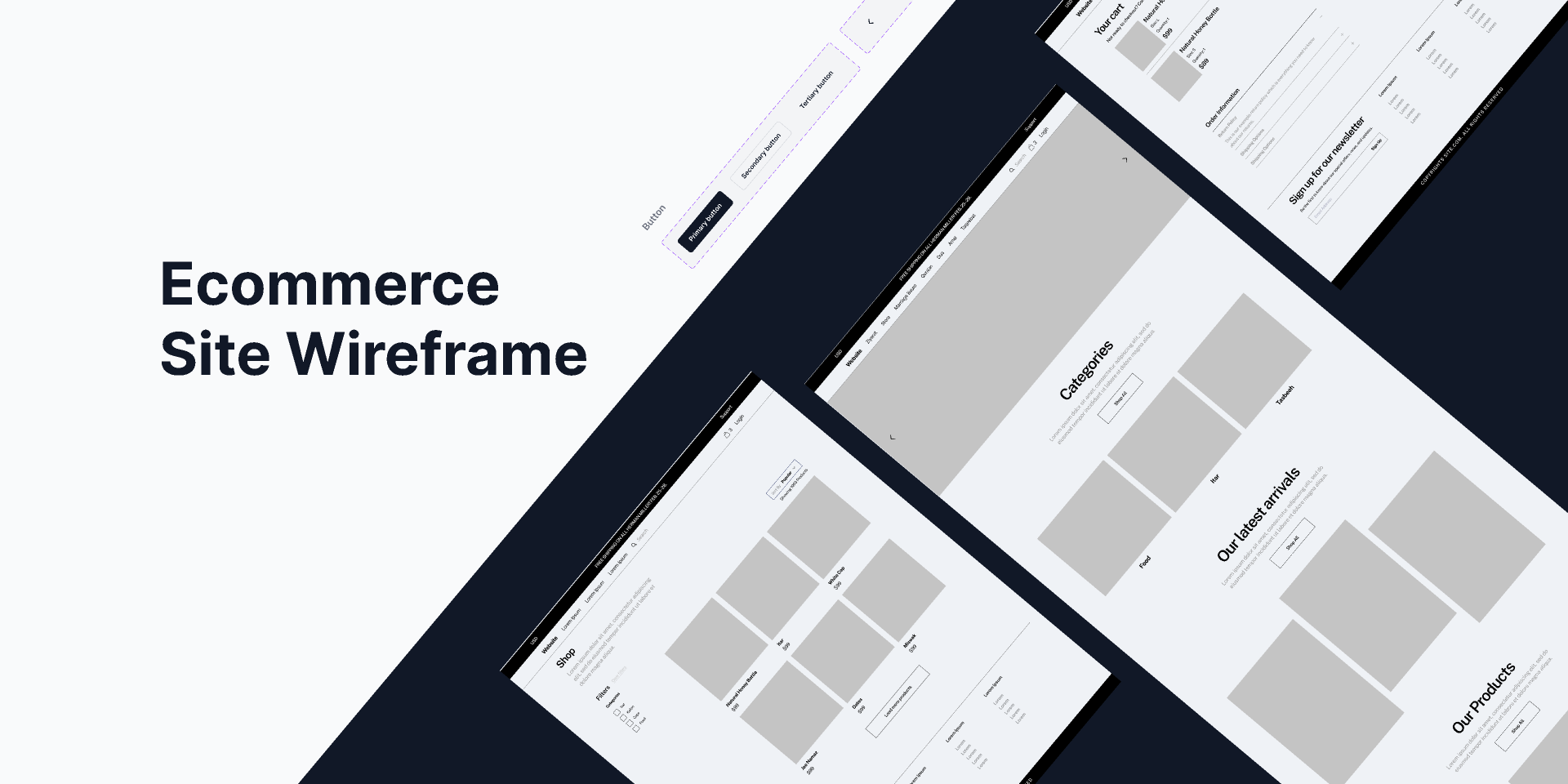
Begin constructing your wireframes by breaking down the user experience into logical stages. Sketch initial layouts that prioritise intuitive navigation pathways showing how customers will move between product categories, search functions, individual product pages, shopping cart, and checkout processes. Focus on creating clean minimalist designs that reduce cognitive load and streamline decision making. Pay special attention to mobile responsiveness ensuring the design works seamlessly across different device types and screen sizes typical of UK online shopping behaviour.
Insider Tip: Create multiple low fidelity wireframe iterations and conduct rapid user testing to validate your design assumptions before investing significant development resources.
Step 3: Build the site using Magento or Shopify
Building your ecommerce website demands careful platform selection that aligns with your UK retail brand’s specific requirements and growth ambitions. Magento and Shopify represent two powerful solutions with distinct capabilities for online retail development.
For brands seeking robust customisation and scalability, Magento offers comprehensive ecommerce capabilities that support complex product catalogues and advanced functionality. Open Source and Commerce editions provide flexibility for businesses ranging from small retailers to enterprise level operations. Consider your technical resources carefully as Magento requires more development expertise compared to more user friendly platforms.
Shopify presents an alternative solution particularly suited to smaller UK retail brands seeking rapid deployment and intuitive setup. Its extensive app ecosystem and straightforward interface allow quicker time to market with lower initial technical investment. Regardless of platform choice, prioritise responsive design ensuring seamless performance across mobile and desktop environments. Focus on creating clean information architecture that facilitates smooth user navigation and reduces friction in the purchasing journey.
Here is a comparison of key features between Magento and Shopify for UK retail brands:
| Factor | Magento | Shopify |
| Customisation Level | Highly customisable | User friendly, limited flexibility |
| Scalability | Suits enterprise growth | Best for small to medium retailers |
| Setup Speed | Longer, requires expertise | Fast, minimal technical skills |
| App Ecosystem | Extensive, developer focused | Large, plug-and-play integrations |
| Upfront Investment | Higher initial cost | Lower barriers to entry |
Insider Tip: Select your ecommerce platform by comprehensively mapping your current and projected business requirements against each platform’s native capabilities and extensibility.
Step 4: Integrate advanced B2B features and tools
Advanced B2B ecommerce features transform your online platform from a simple sales channel into a sophisticated business ecosystem that meets complex wholesale and enterprise purchasing requirements. This step focuses on implementing strategic tools that streamline procurement processes and enhance customer experience for business buyers.
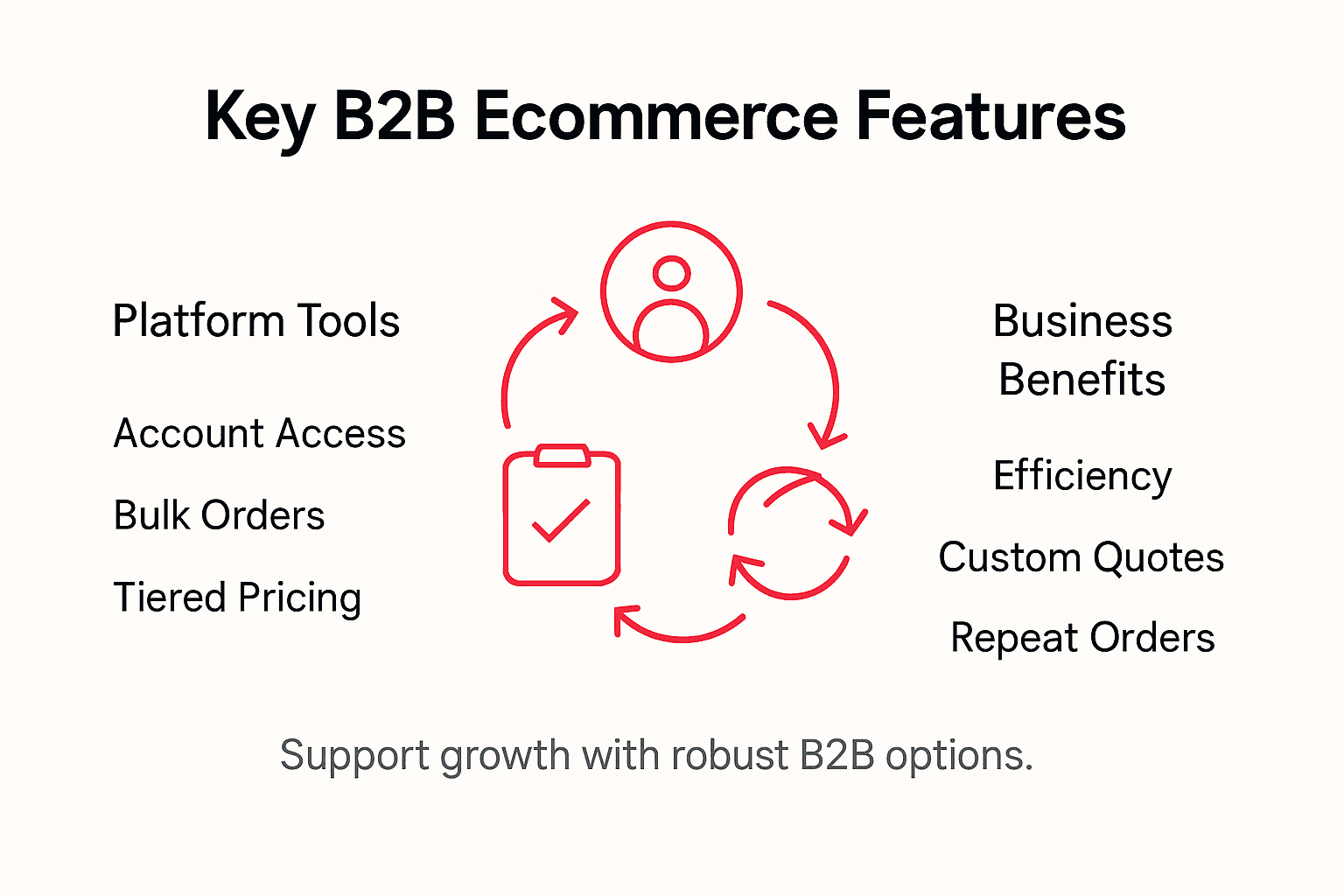
Magento Enterprise offers comprehensive B2B capabilities that support sophisticated account management strategies. Key features include establishing account hierarchies enabling corporate purchasing structures, implementing tiered pricing models that accommodate volume discounts, and creating customised product catalogues tailored to specific business customer segments. These functionalities allow large organisations to manage complex purchasing workflows with granular user permissions and centralised billing controls.
Implement advanced payment integration tools that support multiple payment methods relevant to business transactions. Consider features like purchase order workflows, negotiated pricing mechanisms, and credit account management. Develop robust quote request systems that enable business customers to negotiate pricing and terms directly through your platform. Ensure your checkout process supports multiple shipping addresses, complex tax calculations, and integrated invoicing capabilities that meet enterprise procurement standards.
Below is a summary of advanced B2B ecommerce features and their business value:
| B2B Feature | Business Impact | Typical Use Case |
| Account Hierarchies | Enables structured purchasing management | Enterprises needing tiered user roles |
| Tiered Pricing | Facilitates volume discounts | Wholesalers rewarding bulk orders |
| Custom Catalogues | Personalises product offerings | Large clients with unique requirements |
| Purchase Orders | Simplifies transaction approvals | Businesses requiring internal control |
| Quote Requests | Supports price negotiation directly | B2B clients needing bespoke pricing |
Insider Tip: Configure your B2B features with flexibility in mind, allowing incremental customisation as your business customers evolve their purchasing requirements.
Step 5: Verify performance, security and conversion
The final phase of your ecommerce website development involves rigorous testing and validation to ensure your platform delivers exceptional user experience, robust security, and optimal commercial performance. This critical step transforms your technical implementation into a reliable revenue generating platform.
Conversion rate optimisation for UK ecommerce demands a strategic approach to analysing and improving visitor interactions. Implement comprehensive performance testing across multiple dimensions. Begin with technical performance metrics including page load speeds, mobile responsiveness, and server response times. Conduct thorough cross browser and cross device compatibility checks to guarantee seamless functionality across different user environments.
Security verification is paramount for building customer trust. Deploy robust security protocols including SSL certification, secure payment gateways, and comprehensive data protection measures. Integrate trust signals such as security badges, customer reviews, and transparent privacy policies. Simultaneously, focus on conversion optimisation by analysing user behaviour through heat mapping, conducting A/B testing on critical user journey elements, and implementing intelligent tracking mechanisms that provide granular insights into potential friction points in the purchasing process.
Insider Tip: Treat performance testing as an ongoing process rather than a one time activity, continuously refining and improving your ecommerce platform based on real world user data and emerging technological standards.
Elevate Your UK Retail Brand with Expert Ecommerce Design and Development
Designing an ecommerce website that truly resonates with your UK retail customers means tackling complex challenges like creating intuitive user journeys, selecting the ideal platform, and integrating advanced B2B features. This article highlights essential goals such as seamless navigation, responsive design using tools like Figma, and robust functionality through Magento or Shopify. Ensuring your site meets these needs is critical for boosting conversions and building lasting business growth.
At Big Eye Deers, we specialise in precisely these challenges. With over 17 years of experience delivering bespoke ecommerce solutions, we harness the power of Magento Open Source, Adobe Commerce, and Shopify to build stores that combine custom catalogues, tiered pricing, and account hierarchies tailored to your unique requirements. We guide you through every stage from planning with Figma wireframes to integrating secure payment gateways and optimising onsite performance.
Ready to transform your ecommerce vision into a high-performing reality That’s why hundreds of UK retail brands trust our end-to-end design, build, and support services. Discover how our expertise in UX, advanced B2B tools, and ongoing security monitoring can accelerate your online success Visit Big Eye Deers today and start your journey towards a seamless, scalable ecommerce platform.
Frequently Asked Questions
How can I define my project goals for an ecommerce website?
Defining project goals starts with understanding your brand objectives and customer expectations. Document specific aims such as increasing sales volume or enhancing customer engagement, and create detailed customer persona profiles to inform your website design.
What should I consider when planning user journeys for my ecommerce site?
When planning user journeys, focus on how customers will navigate your site from product discovery to purchase completion. Map each potential interaction point and ensure the design prioritises intuitive navigation to create a seamless shopping experience.
Which platform should I choose for building my ecommerce website?
Selecting a platform depends on your retail brand’s requirements and growth ambitions. Consider factors such as customisation level, scalability, and setup speed; for example, Magento offers extensive capabilities for larger operations, while Shopify is ideal for quicker setup with less technical expertise.
What advanced B2B features should my ecommerce site include?
Incorporating advanced B2B features can enhance the purchasing experience for business customers. Consider implementing account hierarchies, tiered pricing, and quote request systems to streamline transactions and meet complex purchasing requirements for your clients.
How can I verify the performance and security of my ecommerce website?
To ensure reliable performance, conduct thorough testing on page load speeds and mobile responsiveness. Additionally, implement robust security measures such as SSL certification and secure payment gateways, and continuously monitor these aspects to maintain a high standard of customer trust.
Recommended



Adobe Commerce (Magento)
Formerly known as Magento, Adobe Commerce is built for complex catalogues, integrations, and long term growth. We design and develop stable, scalable stores that support demanding eCommerce requirements, including multi-store setups, complex pricing, and Hyva based performance improvements.

Bespoke Build
We design and build custom eCommerce platforms for businesses with complex workflows, integrations, or non standard requirements. Built from scratch around your business needs using Laravel and modern architectures.
Working with brands across the UK from our offices in Cardiff and Exeter, you deal directly with a senior team of designers and developers specialising in Shopify, Magento, WordPress and bespoke eCommerce platforms.
We focus on commercial outcomes. Better conversion rates, strong SEO foundations and eCommerce platforms that continue to improve long after launch.