Definition of SaaS Ecommerce: Modern Retail Solutions

Managing a flourishing online store on Magento or Shopify brings daily challenges for British retailers aiming to stand out in a crowded digital market. Juggling customer loyalty, quick updates, and seamless site performance requires more than manual fixes. Discover how Software as a Service (SaaS) ecommerce delivers ease and flexibility, letting you focus on growth while experts handle technical upkeep and secure infrastructure.
Table of Contents
- What Is SaaS Ecommerce? Core Concepts
- Types of SaaS Ecommerce Platforms Compared
- Key Features and How SaaS Ecommerce Works
- Pricing, Support, and Security Responsibilities
- Benefits, Limitations, and Comparison with On-Premise
- Pitfalls to Avoid When Upgrading to SaaS
Key Takeaways
| Point | Details |
|---|---|
| SaaS Ecommerce Benefits | It provides a cost-effective and flexible approach to online retail, eliminating the need for significant infrastructure investment. |
| Platform Types | Businesses can choose between B2C, B2B, hybrid, and industry-specific solutions, based on their target market and sales strategy. |
| Operational Components | Key features include a user-friendly web interface, secure payment gateways, and robust data management systems. |
| Migration Pitfalls | Careful planning is essential to avoid data security risks and implementation challenges during the transition to SaaS platforms. |
What Is SaaS Ecommerce? Core Concepts
SaaS ecommerce represents a revolutionary approach to online retail, transforming how businesses manage and operate their digital storefronts. At its core, Software as a Service (SaaS) enables retailers to access sophisticated cloud computing application services without extensive technical infrastructure investments.
The fundamental characteristics of SaaS ecommerce include:
- Subscription-based software access delivered entirely via internet
- Centralised software management and automatic updates
- Scalable infrastructure without significant upfront hardware costs
- Instant deployment and configuration for online retail platforms
- Reduced technical maintenance requirements for businesses
Unlike traditional software models, SaaS ecommerce platforms provide comprehensive solutions where the provider manages all technical complexities. This means retailers can focus on their core business activities rather than wrestling with complex technological configurations.
Businesses leveraging SaaS ecommerce solutions gain remarkable flexibility. They can rapidly adapt their online stores, integrate new features, and scale operations without substantial capital expenditure. The multi-tenant architecture allows simultaneous service delivery to multiple clients, ensuring cost-effectiveness and continuous technological improvements.
Pro tip: When selecting a SaaS ecommerce platform, prioritise solutions offering seamless integration capabilities and robust security features to protect your online retail ecosystem.
Types of SaaS Ecommerce Platforms Compared
The landscape of SaaS ecommerce platforms is diverse and complex, offering businesses a range of sophisticated online retail solutions. These cloud-based platforms have revolutionised how companies approach digital selling, providing flexible and scalable options for businesses of all sizes.
Key categories of SaaS ecommerce platforms include:
- B2C Platforms: Designed for direct consumer sales
- B2B Platforms: Tailored for wholesale and business-to-business transactions
- Hybrid Platforms: Supporting multiple sales models
- Industry-Specific Solutions: Customised for niche market requirements
Each platform type brings unique capabilities to digital retail. B2C platforms typically focus on user experience, offering intuitive shopping interfaces and robust payment processing. B2B solutions, conversely, emphasise complex pricing structures, bulk ordering, and account management features.
The selection of an appropriate SaaS ecommerce platform depends on multiple factors, including business scale, technical requirements, and growth potential. Multi-sided market dynamics play a crucial role in determining the most suitable platform, with considerations ranging from integration capabilities to scalability and user engagement.
Here is a comparative overview of SaaS ecommerce platform types and their primary business use cases:
| Platform Type | Target Market | Common Use Case |
|---|---|---|
| B2C | Individual consumers | Retail shopping experiences |
| B2B | Other businesses | Bulk orders and negotiations |
| Hybrid | Mixed audiences | Combined B2B and B2C selling |
| Industry-Specific | Niche sectors | Specialised product catalogues |
Pro tip: Conduct a comprehensive audit of your business requirements before selecting a SaaS ecommerce platform to ensure optimal alignment with your operational needs and future growth strategies.
Key Features and How SaaS Ecommerce Works
SaaS ecommerce platforms operate through a sophisticated three-tier architectural model that ensures seamless digital retail experiences. This cloud-based approach fundamentally transforms how businesses manage online sales by centralising infrastructure, software delivery, and operational management.
Key operational components of SaaS ecommerce platforms include:
- Web Interface: User-facing storefront and interaction layer
- Application Server: Business logic processing and transaction management
- Database Layer: Secure storage of product, customer, and transaction data
- Payment Gateway Integration: Secure transaction processing
- User Authentication Systems: Robust security and access management
The cloud infrastructure enables remarkable flexibility and scalability. Unlike traditional software models, SaaS ecommerce platforms manage all technical complexities centrally, allowing businesses to focus on core commercial strategies rather than infrastructure maintenance. Vendor-neutral cloud architectures support comprehensive retail solutions that seamlessly integrate multiple business functions.

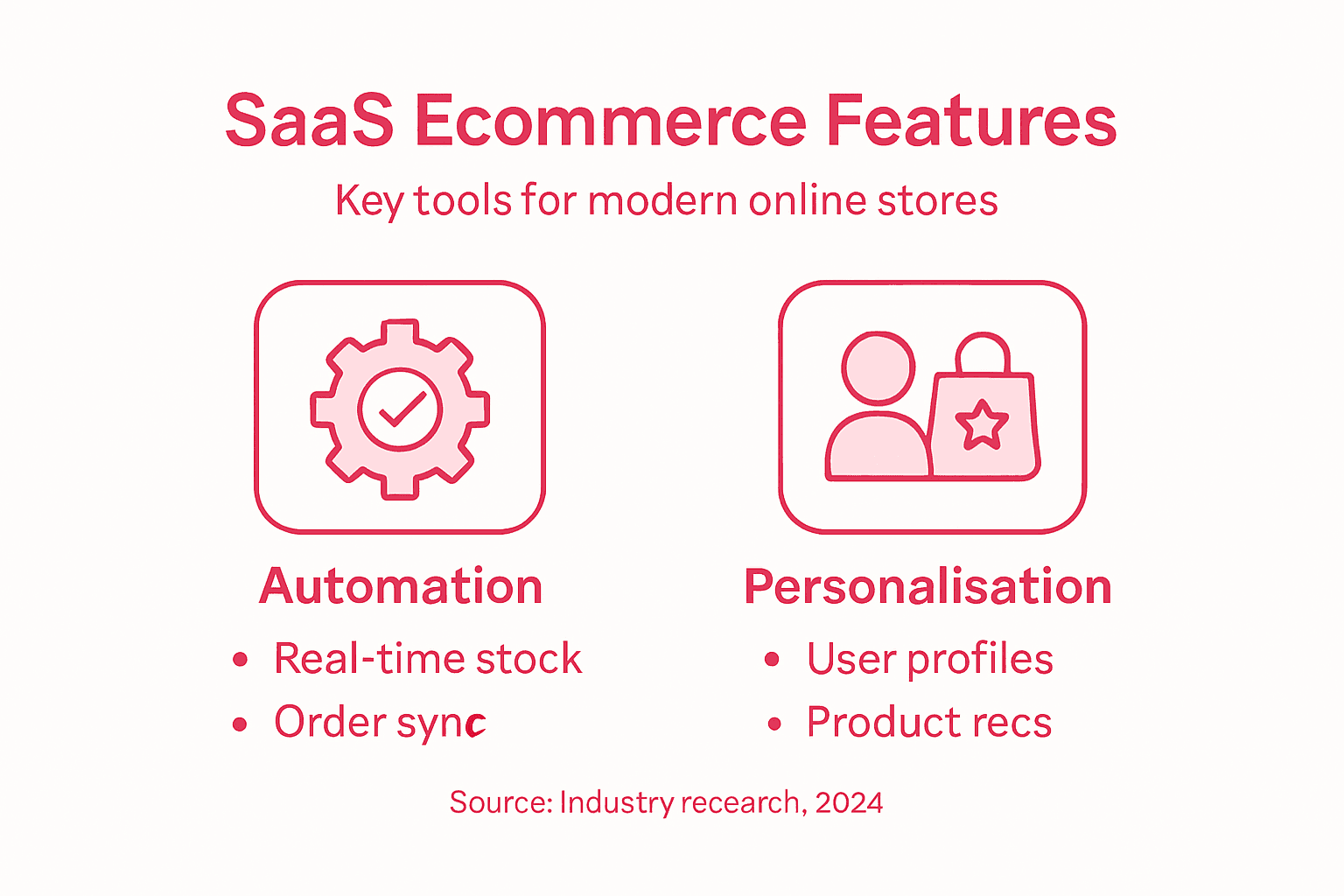
Modern SaaS ecommerce platforms excel at providing advanced features like real-time inventory management, personalised marketing tools, and sophisticated analytics. These capabilities transform digital retail by offering businesses intelligent, data-driven approaches to online selling, with continuous updates and improvements delivered automatically through cloud infrastructure.
Pro tip: Prioritise SaaS ecommerce platforms that offer robust API integrations and comprehensive reporting tools to maximise your operational efficiency and strategic decision-making capabilities.
Pricing, Support, and Security Responsibilities
SaaS ecommerce platforms introduce a nuanced approach to shared security governance where responsibilities are strategically divided between providers and customers. This collaborative model ensures comprehensive protection while maintaining clear operational boundaries.
Key pricing and responsibility dimensions include:
- Provider Responsibilities:
- Platform stability and infrastructure maintenance
- Regular security updates and patches
- Baseline system protection
- Core software functionality
- Customer Responsibilities:
- User access management
- Data configuration and governance
- Compliance with internal security policies
- Monitoring application-level security posture
Pricing models for SaaS ecommerce platforms typically follow subscription-based structures, offering flexibility through tiered pricing strategies. Most providers offer scalable options ranging from basic packages for small businesses to enterprise-level solutions with advanced features and dedicated support.
The most sophisticated SaaS platforms provide transparent security frameworks that empower businesses to understand and actively participate in their digital security ecosystem. This approach moves beyond traditional vendor-customer relationships, creating a collaborative environment where both parties contribute to maintaining robust, secure online retail infrastructure.
Pro tip: Thoroughly review the shared responsibility matrix in your SaaS ecommerce contract to understand precisely which security aspects are managed by the provider versus your organisation.
Benefits, Limitations, and Comparison with On-Premise
SaaS ecommerce platforms offer remarkable advantages in digital retail, presenting a compelling alternative to traditional on-premise solutions through accelerated digital transformation strategies. The evolving technological landscape demands agile, cost-effective approaches to online business infrastructure.
Key comparative advantages of SaaS ecommerce include:
- Cost Efficiency:
- Lower upfront infrastructure investments
- Predictable monthly subscription models
- Reduced IT maintenance expenses
- Scalable pricing structures
- Operational Benefits:
- Automatic software updates
- Rapid deployment capabilities
- Reduced technical complexity
- Continuous platform improvements
While SaaS solutions provide significant flexibility, they simultaneously present notable limitations. Unlike on-premise systems, SaaS platforms can restrict deep customisation options and create potential vendor dependency. Businesses must carefully evaluate their specific requirements, balancing the need for standardised efficiency against bespoke technological solutions.
Comparative Analysis with On-Premise Solutions:
The table below summarises major differences between SaaS and on-premise ecommerce solutions, supporting strategic decision-making:
| Aspect | SaaS Ecommerce | On-Premise Solution |
|---|---|---|
| Initial Investment | Low, subscription-based | High, infrastructure costs |
| Deployment Speed | Rapid, near-instant | Lengthy, complex setup |
| Customisation | Limited, standardised | Extensive, highly flexible |
| Maintenance | Handled by provider | Organisational IT required |
- On-Premise Strengths:
- Complete system control
- Advanced customisation possibilities
- Enhanced data sovereignty
- SaaS Platform Strengths:
- Lower initial investment
- Faster implementation
- Built-in scalability
Pro tip: Conduct a comprehensive organisational needs assessment before selecting between SaaS and on-premise solutions, considering long-term strategic objectives and specific technological requirements.
Pitfalls to Avoid When Upgrading to SaaS
Transitioning to SaaS ecommerce platforms requires strategic planning and awareness of potential risks. Organisations must navigate complex challenges to ensure a smooth and secure migration, particularly when addressing critical security vulnerabilities inherent in cloud-based systems.
Common pitfalls during SaaS migration include:
- Data Security Risks:
- Inadequate access control mechanisms
- Insufficient data encryption protocols
- Weak authentication processes
- Incomplete compliance documentation
- Implementation Challenges:
- Poor vendor evaluation
- Insufficient staff training
- Incomplete integration planning
- Overlooking customisation limitations
Businesses must develop comprehensive migration strategies that prioritise data protection and operational continuity. This involves conducting thorough vendor assessments, understanding shared responsibility models, and implementing robust security frameworks that mitigate potential risks during platform transition.
Successful SaaS adoption requires a holistic approach that balances technological capabilities with organisational readiness. Proactive risk management, continuous staff education, and strategic vendor selection are critical components in minimising potential disruptions and maximising the transformative potential of cloud-based ecommerce solutions.
Pro tip: Conduct a comprehensive security and compliance audit before migrating, ensuring your chosen SaaS platform meets all regulatory requirements and aligns with your organisation’s specific operational needs.
Elevate Your Online Store with Expert SaaS Ecommerce Solutions
Navigating the complex world of SaaS ecommerce can be challenging, especially when balancing the need for scalable, secure platforms with the desire for customisation and seamless integration. This article highlights the critical importance of selecting a solution that offers robust API integrations, shared security governance, and rapid deployment to support your evolving business needs. At Big Eye Deers, we understand these pressures and specialise in delivering bespoke ecommerce platforms tailored to your unique goals, whether you require advanced B2B features or powerful Magento and Shopify builds.
Don’t let technical complexities or security concerns hold back your business growth. Partner with Big Eye Deers to design, build, and support a high-performing online store that combines cutting-edge SaaS ecommerce principles with proven solutions like ERP integrations, multi-store setups, and lifecycle marketing. Discover how our expert team ensures your platform is secure, scalable, and designed for long-term success. Visit our homepage to get started and explore how we can help you transform your digital retail experience today.
Frequently Asked Questions
What is SaaS ecommerce?
SaaS ecommerce refers to Software as a Service solutions designed for online retail. These platforms provide access to cloud-based software applications for managing digital storefronts without the need for extensive on-premise infrastructure.
How do SaaS ecommerce platforms differ from traditional ecommerce solutions?
Unlike traditional ecommerce solutions that require significant upfront investments and hardware, SaaS platforms operate on a subscription basis, offering automatic updates, scalability, and centralised management of software and infrastructure.
What are the main types of SaaS ecommerce platforms?
The main types of SaaS ecommerce platforms include B2C for direct consumer sales, B2B for business-to-business transactions, hybrid platforms that cater to both models, and industry-specific solutions tailored for niche markets.
What should businesses consider when choosing a SaaS ecommerce platform?
Businesses should consider factors such as integration capabilities, scalability, user experience, cost efficiency, technical requirements, and the specific needs of their target market to select the most suitable SaaS ecommerce platform.
Recommended



Adobe Commerce (Magento)
Formerly known as Magento, Adobe Commerce is built for complex catalogues, integrations, and long term growth. We design and develop stable, scalable stores that support demanding eCommerce requirements, including multi-store setups, complex pricing, and Hyva based performance improvements.

Bespoke Build
We design and build custom eCommerce platforms for businesses with complex workflows, integrations, or non standard requirements. Built from scratch around your business needs using Laravel and modern architectures.
Working with brands across the UK from our offices in Cardiff and Exeter, you deal directly with a senior team of designers and developers specialising in Shopify, Magento, WordPress and bespoke eCommerce platforms.
We focus on commercial outcomes. Better conversion rates, strong SEO foundations and eCommerce platforms that continue to improve long after launch.