Step by Step Ecommerce Setup UK: Boost 15% Conversions 2026

Setting up an ecommerce store in the UK can feel overwhelming. Many business owners struggle with platform choices, complex integrations, and security requirements. This guide provides a clear, actionable roadmap to build a performant, secure online store step by step. You’ll learn how to choose the right platform, design effective user experiences, integrate essential systems, implement robust security, and launch confidently. By following this structured approach, you can reduce rework, improve store performance, and achieve measurable conversion improvements.
Table of Contents
- Prerequisites: What You Need Before You Start
- Step 1: Platform Selection and Initial Configuration
- Step 2: UX Design and Store Architecture Planning
- Step 3: ERP, Payment, and Key Integrations
- Step 4: Security Measures and Compliance
- Step 5: Testing, Troubleshooting, and Launch
- Common Mistakes and How to Fix Them
- Expected Outcomes and Performance Benchmarks
- Discover Expert Magento and Shopify Ecommerce Services
- Frequently Asked Questions
Key Takeaways
| Point | Details |
|---|---|
| Stepwise approach ensures scalable setup | Following structured phases reduces costly errors and rework |
| Platform choice drives complexity and timeline | Magento suits complex B2B needs; Shopify enables faster deployment |
| Mobile-first UX reduces bounce rates by 50% | Responsive design captures the majority of UK mobile shoppers |
| Security tools maintain PCI compliance | Solutions like Sansec protect against malware and regulatory penalties |
| Typical timelines: Magento 3-6 months, Shopify 2-12 weeks | Complexity and customization level determine launch speed |
Prerequisites: What You Need Before You Start
Before diving into platform setup, you need solid groundwork. Start by defining clear business goals. Are you targeting direct-to-consumer sales, wholesale B2B, or both? Understanding your audience shapes every decision ahead.
Next, choose your platform strategically. Magento excels with complex catalogues, tiered pricing, and multi-store setups. Shopify offers faster deployment for SMBs seeking rapid market entry. Your product range and business model should guide this choice.
Register a domain that reflects your brand and plan hosting that supports your platform requirements. Magento demands robust server specs; Shopify handles hosting internally. Don’t overlook this early.
UX planning comes next. Use wireframing tools like Figma to design an ecommerce website before development begins. This reduces design errors and saves time later. Map user journeys, navigation flows, and checkout processes on paper first.
Finally, set a realistic budget and timeline. Magento projects typically span 3 to 6 months due to customization depth. Shopify setups range from 2 to 12 weeks depending on integration complexity. Align your expectations with platform realities.
Key preparation steps:
- Define business goals and target audience clearly
- Choose Magento for complex needs or Shopify for speed
- Register domain and arrange suitable hosting
- Use Figma or similar tools for early UX wireframing
- Set budget and timeline matching platform complexity
Pro Tip: Invest time in UX wireframing upfront. Every hour spent planning saves five hours fixing design issues post-build.
Step 1: Platform Selection and Initial Configuration
Choosing the right platform sets the foundation for everything that follows. Magento fits UK ecommerce stores needing advanced B2B features, custom catalogues, and multi-store management. Think tiered pricing, account hierarchies, and ERP integrations. It’s powerful but requires longer setup time.
Shopify suits businesses prioritizing speed to market. It offers a user-friendly interface, hosted infrastructure, and streamlined app ecosystem. For SMBs with straightforward product ranges, Shopify delivers faster results.
Once you’ve chosen, configure core settings immediately. Set up your domain and implement SSL certificates to secure customer transactions. This isn’t optional; SSL builds trust and improves search rankings.
Configure your store currency to GBP. UK customers expect local currency and payment methods. Next, set up tax configurations to comply with UK VAT rules. Incorrect tax settings cause compliance headaches and customer confusion.
Your initial configuration impacts launch speed and compliance. Prioritize settings that align with your business scale and product complexity. Get these fundamentals right before moving forward.
Initial configuration checklist:
- Install and configure chosen platform
- Set up domain and implement SSL certificates
- Configure GBP currency and UK tax rules
- Set up admin users and access permissions
- Configure basic shipping and payment settings
- Test core functionality before proceeding
Platform features to prioritize:
- Multi-store capabilities if scaling geographically
- Custom catalogue structures for complex inventories
- B2B features like tiered pricing and quote management
- Mobile-responsive themes and templates
- Integration readiness for ERP and marketing tools
Step 2: UX Design and Store Architecture Planning
UX design makes or breaks ecommerce performance. Start by using Figma to map user journeys and wireframe interface layouts. Visualize how customers discover products, navigate categories, and complete checkout. This planning phase prevents costly redesigns later.

Structure your product catalogue logically. Organize by category, use clear attributes, and implement robust filtering. UK shoppers expect intuitive navigation. Poor catalogue structure increases bounce rates and kills conversions.
Design with a mobile-first approach. Over 60% of UK ecommerce traffic comes from mobile devices. Optimizing for mobile isn’t optional anymore. Skipping mobile optimization can increase bounce rates by 50%.
Test your designs across devices before development. Check load times, tap targets, and readability on various screen sizes. Mobile-responsive stores reduce bounce rates dramatically and boost conversions measurably.
| Metric | Mobile Optimized | Desktop Only |
|---|---|---|
| Bounce Rate | 35% | 55% |
| Average Session Duration | 4.2 minutes | 3.1 minutes |
| Conversion Rate | 2.8% | 1.9% |
| Page Load Time | 2.1 seconds | 3.8 seconds |
UX design priorities:
- Wireframe complete user journeys in Figma
- Structure catalogues with clear categories and filters
- Design mobile-first for majority traffic source
- Test responsive behavior across devices
- Plan intuitive checkout with minimal steps
Pro Tip: Create a UX audit checklist covering navigation, search, product pages, and checkout. Test each element on mobile before approving designs.
Step 3: ERP, Payment, and Key Integrations
Integrations connect your store to essential business systems. Start with ERP integration for inventory and order management. UK ecommerce operations demand real-time stock visibility and automated fulfillment workflows. Without ERP integration, you’ll manually reconcile orders, risking errors and delays.
Set up payment gateways that ensure PCI DSS compliance. UK customers expect secure transactions supporting GBP and popular payment methods. Choose gateways like Stripe, PayPal, or Worldpay that handle compliance heavy lifting. Test payment flows thoroughly before launch.
Implement marketing automation through third-party integrations like Klaviyo. Lifecycle marketing increases customer retention and lifetime value. Automated email flows for abandoned carts, post-purchase follow-ups, and win-back campaigns drive measurable revenue.
Test every integration extensively pre-launch. Order sync failures and payment errors damage customer trust immediately. Run test transactions, simulate order volumes, and verify data flows between systems.
Well-planned integrations streamline operations and reduce fulfillment delays. They also enable data-driven decisions through consolidated reporting.
Essential integrations:
- ERP systems for inventory and order management
- Payment gateways ensuring PCI DSS compliance
- Marketing automation platforms like Klaviyo
- Search and merchandising tools like Klevu
- Shipping carrier APIs for real-time rates
- Analytics and reporting dashboards
Step 4: Security Measures and Compliance
Security isn’t a one-time task; it’s an ongoing commitment. Start by implementing malware detection tools. Sansec protects Magento stores against malware and supply chain attacks, maintaining PCI compliance crucial for UK payment regulations. Magento’s flexibility makes it a target for attacks, so proactive monitoring is essential.
Ensure ongoing PCI DSS compliance to safeguard payment data. Non-compliance brings heavy fines and reputational damage. Regular security audits verify your store meets evolving standards. Don’t assume initial compliance lasts forever.
Establish proactive security monitoring to reduce downtime and data breaches. Automated alerts catch suspicious activity before it escalates. Your customers trust you with sensitive data; honor that trust through vigilance.
Shopify stores benefit from platform-level security but still need additional measures for UK compliance. Use available app integrations for fraud detection and data protection. Review Shopify’s security features and supplement gaps based on your risk profile.
Security is continuous, not a launch checklist item. Schedule regular reviews, update software promptly, and train staff on security best practices.
Security implementation steps:
- Install malware detection like Sansec for Magento stores
- Configure PCI DSS compliance scanning and reporting
- Set up automated security monitoring and alerts
- Implement fraud detection on payment processing
- Establish regular security audit schedule
- Train team on security protocols and data handling
“Security breaches cost UK ecommerce stores an average of £3.2 million in damages and lost revenue. Proactive monitoring and compliance reduce this risk by over 80%.”
For comprehensive guidance, explore security best practices for UK ecommerce and consider Sansec’s security solutions for ongoing protection.
Step 5: Testing, Troubleshooting, and Launch
Testing validates everything you’ve built. Start with responsive testing across devices and browsers. Check layout, functionality, and load times on iPhone, Android, tablets, and desktops. UK shoppers use diverse devices; your store must work flawlessly on all.
Conduct load testing to ensure scalability under traffic. Simulate peak shopping periods like Black Friday. If your store crashes during high traffic, you lose sales and damage reputation. Better to discover capacity limits now than during a promotion.
Identify common mistakes before they reach customers. Poor product data, broken navigation, and confusing checkout kill conversions. Use this ecommerce launch checklist to verify critical elements systematically.
Pre-launch testing checklist:
- Test responsive design on major devices and browsers
- Verify all payment gateways process transactions correctly
- Confirm ERP integration syncs orders and inventory
- Check tax calculations for UK VAT compliance
- Test email notifications for orders and accounts
- Verify SSL certificates and security scanning
- Review site speed and optimize slow pages
- Test search functionality and filtering
- Confirm mobile checkout completes smoothly
- Review analytics tracking and conversion goals
Common issues to fix:
- Broken mobile navigation menus
- Slow page load times affecting conversions
- Payment gateway configuration errors
- Incorrect tax calculations for UK regions
- Missing product images or descriptions
Pro Tip: Schedule a soft launch phase with limited traffic. Gather user feedback, monitor analytics, and fix emerging issues before full marketing push.
Common Mistakes and How to Fix Them
Many UK ecommerce stores repeat avoidable errors. Learning from others’ mistakes saves time and money. Here are the most common pitfalls and practical fixes.
Ignoring mobile optimization remains surprisingly common. Fix this by adopting mobile-first design from day one. Test every page on actual mobile devices, not just browser emulators. Prioritize touch-friendly interfaces and fast load times.
Inadequate product data structure hampers search and filtering. Fix by standardizing attributes, enriching descriptions, and implementing consistent taxonomy. Good data architecture improves discoverability and reduces support queries.
Skipping ERP and payment integrations causes operational chaos. Fix by planning integrations early and testing thoroughly pre-launch. Don’t bolt on critical systems as afterthoughts. Budget time and resources appropriately.
Neglecting security monitoring invites breaches and compliance failures. Fix with tools like Sansec for Magento security and regular vulnerability scans. Make security a standing agenda item in operations reviews.
How to avoid mistakes:
- Start with mobile-first design, not desktop
- Invest in proper product data modeling early
- Plan and test integrations before launch
- Implement proactive security monitoring
- Schedule regular post-launch audits
Pro Tip: Regular audits catch evolving issues early. Schedule quarterly reviews of performance, security, and user experience. Small fixes compound into significant improvements.
For stores managing multiple markets, be aware of multi-store ecommerce pitfalls that complicate setup and maintenance.
Expected Outcomes and Performance Benchmarks
Understanding realistic timelines and outcomes helps set proper expectations. Magento setups typically require 3 to 6 months due to customization depth and integration complexity. This includes design, development, testing, and launch phases.
Shopify projects range from 2 to 12 weeks depending on customization level and integration requirements. Simple stores launch faster; complex B2B setups take longer even on Shopify.
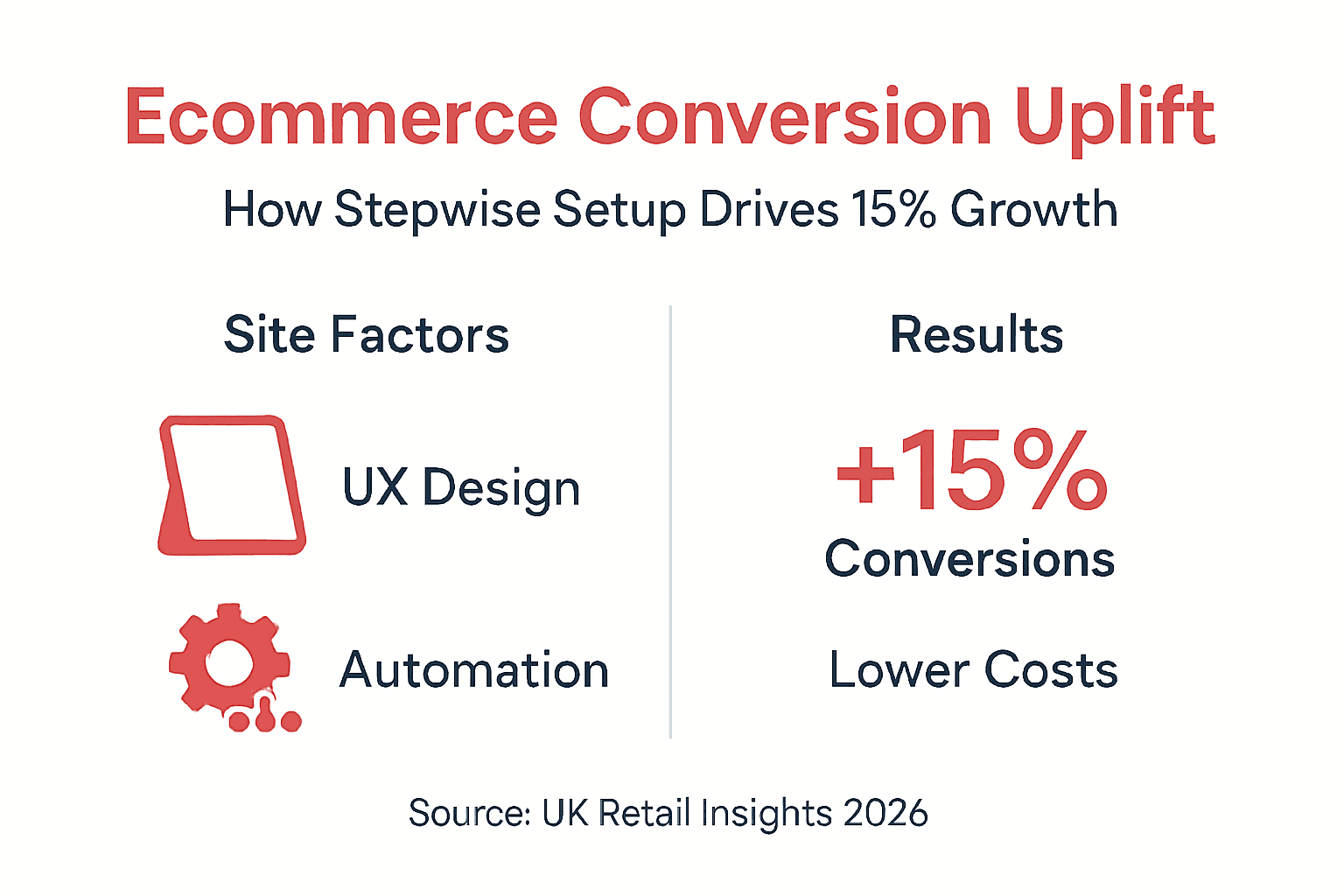
UX optimization and marketing automation improve conversions by 10 to 15% on average. Well-designed user journeys reduce friction and guide customers toward purchase. Lifecycle marketing via Klaviyo recovers abandoned carts and increases repeat purchases.
Mobile optimization reduces bounce rates by at least 20%. UK mobile traffic dominates, so responsive design directly impacts bottom-line performance. Faster load times and intuitive mobile interfaces keep customers engaged.
ERP and multi-store integrations lower operational costs by up to 20%. Automation eliminates manual data entry, reduces errors, and speeds fulfillment. These efficiency gains scale with business growth.
Zero security incidents and maintained PCI compliance ensure customer trust. One breach can destroy reputation and trigger regulatory penalties. Proactive security investments pay for themselves many times over.
| Metric | Magento Setup | Shopify Setup |
|---|---|---|
| Typical Timeline | 3-6 months | 2-12 weeks |
| Conversion Improvement | 10-15% | 10-15% |
| Bounce Rate Reduction | 20-25% | 20-25% |
| Operational Cost Savings | 15-20% | 10-15% |
| Security Incident Rate | <1% with monitoring | <1% with monitoring |
Discover Expert Magento and Shopify Ecommerce Services
Building a high-performance ecommerce store requires expertise across platforms, UX design, integrations, and security. Big Eye Deers specializes in Shopify design and development and Magento web design services tailored for UK businesses.
With over 17 years of experience, we deliver complex solutions for growing and enterprise retail brands. Our services span platform setup, UX optimization using Figma, ERP integrations, lifecycle marketing with Klaviyo, and ongoing security monitoring with Sansec. Whether you need a rapid Shopify deployment or a sophisticated Magento multi-store setup, we provide the technical depth and strategic guidance to execute successfully.
Contact Big Eye Deers to transform your ecommerce vision into a secure, performant online store that drives measurable growth.
Frequently Asked Questions
What factors should influence my choice between Magento and Shopify?
Choose Magento if you need complex B2B features, custom catalogues, tiered pricing, or multi-store management. Shopify suits businesses prioritizing faster deployment, simpler product ranges, and lower technical overhead. Your business model, product complexity, and growth timeline determine the best fit.
How long does it typically take to launch a performance-optimized Shopify store?
A straightforward Shopify store can launch in 2 to 4 weeks with minimal customization. Complex setups requiring custom apps, extensive integrations, or advanced B2B features may take 8 to 12 weeks. Timeline depends on design complexity, integration scope, and content readiness.
What are the must-have security measures for UK ecommerce stores?
Implement SSL certificates, PCI DSS compliant payment processing, malware detection tools like Sansec for Magento, and regular vulnerability scanning. Establish proactive monitoring, train staff on data handling, and schedule quarterly security audits. Compliance isn’t optional; it’s essential for customer trust and regulatory adherence.
How can I ensure my store is mobile-friendly and reduces bounce rate?
Adopt mobile-first design from the start. Test responsive behavior on actual devices, not just emulators. Optimize page load times, use touch-friendly interfaces, and simplify mobile checkout. Monitor mobile analytics closely and iterate based on user behavior data.
What are key integrations necessary for UK ecommerce operational success?
ERP systems for inventory and order management, PCI-compliant payment gateways supporting GBP, marketing automation platforms like Klaviyo for lifecycle campaigns, search and merchandising tools like Klevu, and shipping carrier APIs for real-time rates. These integrations streamline operations, reduce errors, and enable data-driven decisions.
Recommended



Adobe Commerce (Magento)
Formerly known as Magento, Adobe Commerce is built for complex catalogues, integrations, and long term growth. We design and develop stable, scalable stores that support demanding eCommerce requirements, including multi-store setups, complex pricing, and Hyva based performance improvements.

Bespoke Build
We design and build custom eCommerce platforms for businesses with complex workflows, integrations, or non standard requirements. Built from scratch around your business needs using Laravel and modern architectures.

Working with brands across the UK from our offices in Cardiff and Exeter, you deal directly with a senior team of designers and developers specialising in Shopify, Magento, WordPress and bespoke eCommerce platforms.
We focus on commercial outcomes. Better conversion rates, strong SEO foundations and eCommerce platforms that continue to improve long after launch.