Role of Shopify in Online Retail Success

Nearly half of British consumers expect a seamless shopping journey from start to finish, yet many ecommerce brands struggle to meet these rising standards. For retail managers navigating fierce competition, choosing the right platform matters more than ever. Exploring Shopify’s strategic role in digital retailing reveals how British brands can deliver world-class customer experiences, streamline operations, and stay agile as market demands shift.
Table of Contents
- Shopify’s Purpose in Digital Retailing
- Essential Shopify Features for Retail Brands
- Integration with Third-Party Services and Tools
- Performance, Security, and Scalability Concerns
- Comparing Shopify to Other Ecommerce Platforms
Key Takeaways
| Point | Details |
|---|---|
| Shopify’s Comprehensive Platform | Shopify offers a complete digital infrastructure, allowing retailers to create immersive shopping experiences and adapt to changing market dynamics. |
| Advanced Features for Retailers | Innovative tools such as AI assistants and sophisticated analytics enhance online performance and customer engagement. |
| Seamless Integration Capabilities | The platform’s ability to integrate with various third-party tools helps streamline operations and create unified commerce solutions. |
| Competitive Edge in E-commerce | Shopify’s comprehensive support and user-friendly design make it ideal for small and medium-sized enterprises compared to other platforms. |
Shopify’s Purpose in Digital Retailing
Shopify represents a transformative platform designed to empower online retailers by providing comprehensive digital infrastructure for global commerce. At its core, the platform enables businesses to create immersive and unified shopping experiences across multiple digital channels. Powering global commerce infrastructure has become Shopify’s strategic mission, supporting brands from small startups to large enterprise organisations.
The platform’s purpose extends beyond simple transactional systems. Shopify delivers an integrated ecosystem that supports retailers through sophisticated tools for website design, payment processing, inventory management, and marketing automation. By offering scalable solutions, the platform allows businesses to grow seamlessly without technological constraints. Retailers can customise their online stores, connect with customers through multiple sales channels, and leverage advanced analytics to make data-driven decisions.
Moreover, Shopify’s strategic approach includes monetising customer data through innovative advertising platforms, positioning the company as a forward-thinking digital commerce leader. This approach enables retailers to not just sell products, but to build comprehensive digital experiences that engage customers across different touchpoints. The platform’s flexibility allows businesses to adapt quickly to changing market dynamics, providing tools for social media integration, multichannel selling, and personalised customer interactions.
Pro tip: Select a Shopify plan that matches your business’s current scale and growth trajectory to maximise platform capabilities without overspending on unnecessary features.
Essential Shopify Features for Retail Brands
Shopify offers a comprehensive suite of features designed to transform digital retail experiences for brands of all sizes. Advanced features introduced in 2023 represent a significant leap forward in ecommerce technology, providing retailers with powerful tools to enhance online performance. These innovations include AI-powered assistants, customisable checkout experiences, and sophisticated backend management systems that streamline operational efficiency.
Key features that stand out for retail brands include advanced product management capabilities. Retailers can now create dynamic product bundles, implement flexible subscription models, and design highly personalised shopping experiences. The platform’s design sections allow for unprecedented customisation, enabling brands to create unique digital storefronts that reflect their specific aesthetic and brand identity. Multichannel selling tools integrate seamlessly with social media platforms, payment gateways, and inventory management systems, providing a unified approach to digital commerce.
Performance optimisation remains a critical aspect of Shopify’s feature set. The platform offers robust analytics tools that enable retailers to track customer behaviour, monitor conversion rates, and make data-driven decisions. Automated marketing features, including email campaigns and targeted advertising tools, help brands effectively reach and engage their target audience. The checkout process has been significantly enhanced, with customisable options designed to reduce cart abandonment and improve overall conversion rates.
Here is a summary of how Shopify’s key features support retail business needs:
| Feature Area | Description | Business Impact |
|---|---|---|
| Website Design | Customisable storefronts and themes | Strong brand identity and engaging visuals |
| Payment Processing | Secure, encrypted transactions across methods | Builds customer trust, reduces payment friction |
| Inventory Management | Automated stock tracking and updates | Reduces errors, improves fulfilment speed |
| Marketing Automation | Tools for email and advertising campaigns | Increases customer engagement, drives conversions |
| Advanced Analytics | In-depth customer and sales insights | Enables data-driven strategic decisions |
Pro tip: Regularly explore and test new Shopify features to ensure your online store remains technologically competitive and provides the best possible customer experience.
Integration with Third-Party Services and Tools
Shopify’s ecosystem thrives on its remarkable ability to connect with a diverse range of third-party services, enabling retailers to create comprehensive and sophisticated digital commerce solutions. Specialist Shopify integration agencies provide custom solutions that transform how businesses manage their online operations, bridging critical systems across different business functions.
The platform supports seamless integrations with essential business tools, including Enterprise Resource Planning (ERP) systems, inventory management platforms, Customer Relationship Management (CRM) software, and accounting systems. These integrations are particularly powerful for retail brands seeking to streamline their operational workflows. Retailers can synchronise product data, automate inventory tracking, manage customer interactions, and ensure real-time financial reporting without manual intervention. Advanced integration capabilities allow businesses to create custom connections that match their unique operational requirements, reducing administrative overhead and minimising potential errors.

Moreover, Shopify’s extensive app marketplace offers pre-built and custom integration solutions across multiple business domains. Marketing tools like Klaviyo enable sophisticated email campaigns, while analytics platforms such as Google Analytics provide deep insights into customer behaviour. Payment gateways, shipping providers, and fulfilment services can be effortlessly connected, creating a unified ecosystem that supports scalable and efficient retail operations. The flexibility of these integrations means that businesses can continually adapt their technological infrastructure as their needs evolve, without disrupting existing systems.
Pro tip: Conduct a comprehensive audit of your current business systems before implementing Shopify integrations to ensure maximum compatibility and minimal operational disruption.
Performance, Security, and Scalability Concerns
Shopify addresses critical operational challenges for online retailers through a comprehensive approach to platform performance and security. Key technical improvements in 2023 demonstrate the platform’s commitment to delivering robust, high-speed infrastructure that supports businesses of all sizes. The engineering team continuously optimises platform architecture, focusing on reducing complexity and enhancing overall system efficiency.
Security remains a paramount concern for online retailers, and Shopify provides multilayered protection mechanisms. Comprehensive security measures include SSL certificates, rigorous PCI compliance standards, advanced fraud detection systems, and encrypted payment processing. These protections create a secure environment that safeguards both merchant and customer data, reducing potential vulnerabilities and building trust in the digital marketplace. The platform’s infrastructure is designed to handle significant traffic volumes while maintaining consistent performance, enabling businesses to scale operations without compromising system reliability.
Scalability is another critical advantage of the Shopify ecosystem. The platform’s cloud-based architecture allows businesses to expand their online presence seamlessly, supporting growth from small startups to large enterprise operations. Merchants can handle increased transaction volumes, integrate complex business logic, and manage sophisticated product catalogues without requiring significant technical infrastructure investments. Automated performance monitoring, rapid content delivery networks, and intelligent caching mechanisms ensure that online stores remain responsive and efficient, regardless of traffic fluctuations or seasonal demand spikes.
Pro tip: Regularly conduct performance audits and leverage Shopify’s built-in analytics to proactively identify and address potential scalability bottlenecks in your online store.
Comparing Shopify to Other Ecommerce Platforms
Distinctive features of ecommerce platforms reveal Shopify’s competitive advantages in the digital marketplace. Unlike traditional alternatives like WooCommerce and Magento, Shopify offers an integrated solution that combines ease of use, robust infrastructure, and comprehensive support for businesses across different growth stages. The platform distinguishes itself through a unique combination of user-friendly design, scalable architecture, and powerful built-in functionality.
In the United Kingdom’s retail landscape, Shopify demonstrates particular strengths compared to competing platforms. Small and medium-sized businesses benefit from its streamlined setup process, integrated hosting, and sophisticated multi-channel selling capabilities. While platforms like WooCommerce require extensive technical configuration and BigCommerce demands more complex implementation, Shopify provides a more accessible entry point for retailers seeking a comprehensive ecommerce solution. The platform’s continuous improvements and responsive development cycle ensure that merchants can adapt quickly to changing digital commerce requirements.
Key differentiators include Shopify’s comprehensive app ecosystem, reliable performance, and all-inclusive infrastructure. Unlike self-hosted platforms that require separate security, hosting, and payment processing arrangements, Shopify delivers an end-to-end solution. The platform includes built-in security measures, 24/7 technical support, and seamless payment integrations. This approach reduces operational complexity for retailers, allowing them to focus on core business strategies rather than managing technical infrastructure. Scalability remains another significant advantage, with Shopify supporting businesses from startup phase through enterprise-level operations.
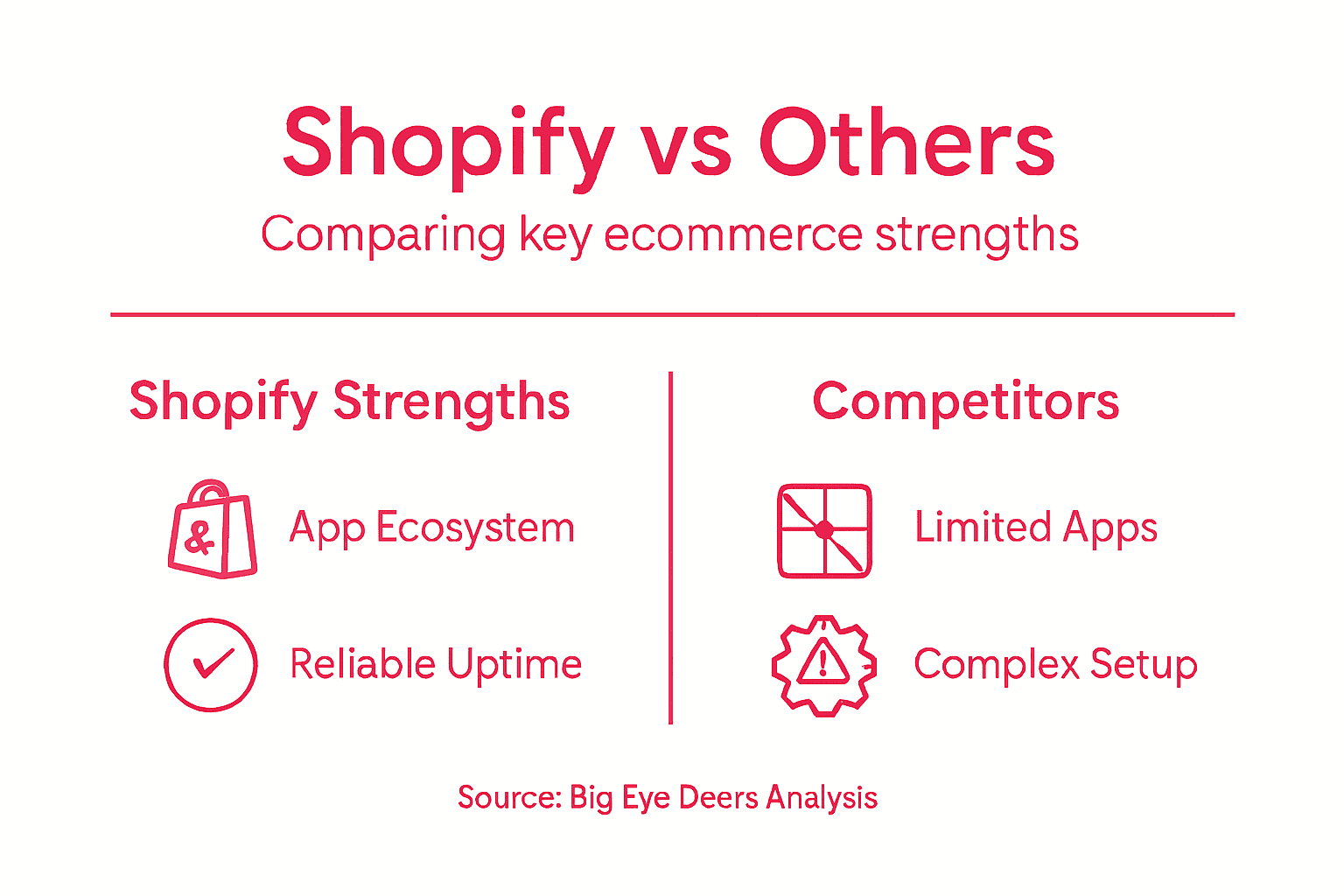
The following table compares Shopify with WooCommerce and Magento for UK-based retailers:
| Platform | Main Advantages | Key Limitations | Best for |
|---|---|---|---|
| Shopify | Fully hosted, simple setup, strong security | Monthly costs, less custom backend access | SMEs wanting speed and ease |
| WooCommerce | Flexible, integrates with WordPress, low initial cost | Requires hosting, more technical knowledge | Businesses with in-house developers |
| Magento | Highly scalable, advanced features | Complex setup, high resources needed | Large enterprises seeking control |
Pro tip: Conduct a thorough evaluation of your specific business requirements and technical capabilities before selecting an ecommerce platform, considering factors beyond initial pricing.
Unlock Your Online Retail Potential with Expert Shopify Solutions
The article highlights the crucial role Shopify plays in driving digital retail success by offering scalable infrastructure, seamless integrations, and robust security. If you are facing challenges such as managing complex inventory, optimising multichannel selling, or needing customisable ecommerce features that align with your brand identity, you are not alone. Many retailers struggle to maximise Shopify’s potential without expert guidance on performance, advanced integrations, and UX design.
At Big Eye Deers, we specialise in designing, building, and supporting high-performing Shopify stores tailored to your unique business needs. With over 17 years of experience, our team ensures your ecommerce platform is secure, scalable, and optimised for conversions. From custom integrations to lifecycle marketing with Klaviyo and intelligent product discovery using Klevu search, we provide comprehensive support to keep your Shopify store competitive and future-proof.

Take the next step towards ecommerce excellence and transform your Shopify store into a powerful revenue driver. Connect with our experts today to explore custom solutions that deliver smooth customer journeys and sustained growth. Visit Big Eye Deers to get started and turn your online retail ambitions into reality.
Frequently Asked Questions
What is the primary purpose of Shopify in online retail?
Shopify is designed to empower online retailers by providing a comprehensive platform for global commerce, enabling businesses to create immersive shopping experiences across multiple digital channels.
What are some key features of Shopify that support retail brands?
Shopify offers advanced product management capabilities, customisable storefronts, secure payment processing, inventory management, marketing automation, and robust analytics tools, helping retailers enhance their online performance.
How does Shopify facilitate integration with third-party tools?
Shopify supports seamless integrations with various business tools, including ERP systems, CRM software, and analytics platforms, enabling retailers to synchronise their operations and create custom connections as needed.
What security measures does Shopify implement to protect online retailers?
Shopify provides multilayered security features, including SSL certificates, PCI compliance, and advanced fraud detection systems, ensuring a secure environment for both merchants and customers.
Recommended



Adobe Commerce (Magento)
Formerly known as Magento, Adobe Commerce is built for complex catalogues, integrations, and long term growth. We design and develop stable, scalable stores that support demanding eCommerce requirements, including multi-store setups, complex pricing, and Hyva based performance improvements.

Bespoke Build
We design and build custom eCommerce platforms for businesses with complex workflows, integrations, or non standard requirements. Built from scratch around your business needs using Laravel and modern architectures.

Working with brands across the UK from our offices in Cardiff and Exeter, you deal directly with a senior team of designers and developers specialising in Shopify, Magento, WordPress and bespoke eCommerce platforms.
We focus on commercial outcomes. Better conversion rates, strong SEO foundations and eCommerce platforms that continue to improve long after launch.