 More than 60 percent of british ecommerce managers say off-the-shelf platforms limit their brand’s growth. As competition intensifies, retail leaders face the challenge of standing out and delivering digital experiences that feel truly bespoke. Custom web applications are redefining what brands can offer through Magento and Shopify, giving managers control over performance, unique features, and the customer journey. This guide breaks down the real benefits and pitfalls, showing how tailored technology supports operational efficiency and memorable user experiences.
Table of Contents
- Defining Custom Web Applications In Ecommerce
- Key Variations: Purpose-Built Vs Off-The-Shelf
- Essential Features For Growing Retail Brands
- Integrating Custom Apps With Magento And Shopify
- Risks, Costs, And Common Pitfalls To Avoid
Key Takeaways
| Point | Details |
|---|---|
| Custom Web Applications Enhance Ecommerce | Custom web applications provide tailored solutions that improve user interaction and meet specific business needs, distinguishing brands in a competitive landscape. |
| Consider Purpose-Built Solutions | Purpose-built applications offer extensive customisation compared to off-the-shelf options, which may limit growth potential despite initial convenience. |
| Key Features Drive Engagement | Essential features like personalised profiles and secure payment systems are crucial for fostering customer trust and enhancing the overall shopping experience. |
| Integration is Vital for Operational Efficiency | Effective integration with platforms like Magento and Shopify is necessary to automate processes and provide real-time data, improving overall business performance. |
Defining Custom Web Applications in Ecommerce
Custom web applications represent sophisticated, purpose-built digital solutions designed to transform how ecommerce businesses operate and engage with customers. These specialised software platforms go far beyond traditional websites, offering interactive digital experiences that are meticulously crafted to address specific business requirements and consumer expectations.
At their core, custom web applications are interactive software systems tailored precisely to unique business needs, enabling organisations to create distinctive digital environments that differentiate them in a competitive marketplace. Unlike generic off-the-shelf solutions, these applications provide granular control over functionality, design, and user experience, allowing businesses to implement complex features that standard platforms cannot support.
The fundamental characteristics of custom web applications in ecommerce include:
- Complete adaptability across different operating systems
- Scalable architectures that grow with business requirements
- Enhanced user interaction capabilities
- Seamless integration with existing business systems
- Advanced performance optimisation
These applications fundamentally differ from standard websites by focusing on dynamic, transactional experiences rather than static information display. They are designed to support complex user interactions essential for modern online commerce, transforming digital platforms from mere online catalogues into comprehensive, engagement-driven ecosystems.
Pro tip: When planning a custom web application, prioritise user experience and clear performance metrics to ensure your investment translates directly into improved customer conversion rates.
Key Variations: Purpose-Built vs Off-the-Shelf
In the dynamic world of ecommerce, businesses face a critical strategic decision when selecting digital platforms: choosing between purpose-built custom solutions and standardised off-the-shelf applications. Each approach carries distinct advantages and potential limitations that can significantly impact operational effectiveness and long-term growth potential.
Purpose-built ecommerce solutions offer unprecedented levels of customisation and strategic alignment, enabling organisations to create digital experiences precisely matched to their unique business requirements. These tailored applications provide granular control over functionality, allowing businesses to implement specialised features that generic platforms cannot accommodate. Custom solutions excel in addressing complex operational needs, supporting intricate workflows, and creating distinctive user experiences that set brands apart in competitive markets.
Conversely, off-the-shelf applications present compelling advantages for businesses seeking rapid deployment and lower initial investment. These standardised platforms provide:
- Faster implementation timelines
- Lower upfront development costs
- Pre-configured standard features
- Simplified maintenance processes
- Immediate operational readiness
However, the decision between custom and standard solutions requires careful evaluation of operational requirements, budgetary constraints, and long-term growth strategies. While off-the-shelf solutions offer quick start capabilities, they may ultimately restrict business potential by limiting customisation and scalability. Businesses must conduct comprehensive assessments of their specific needs, anticipated growth trajectories, and technological infrastructure to determine the most appropriate approach.
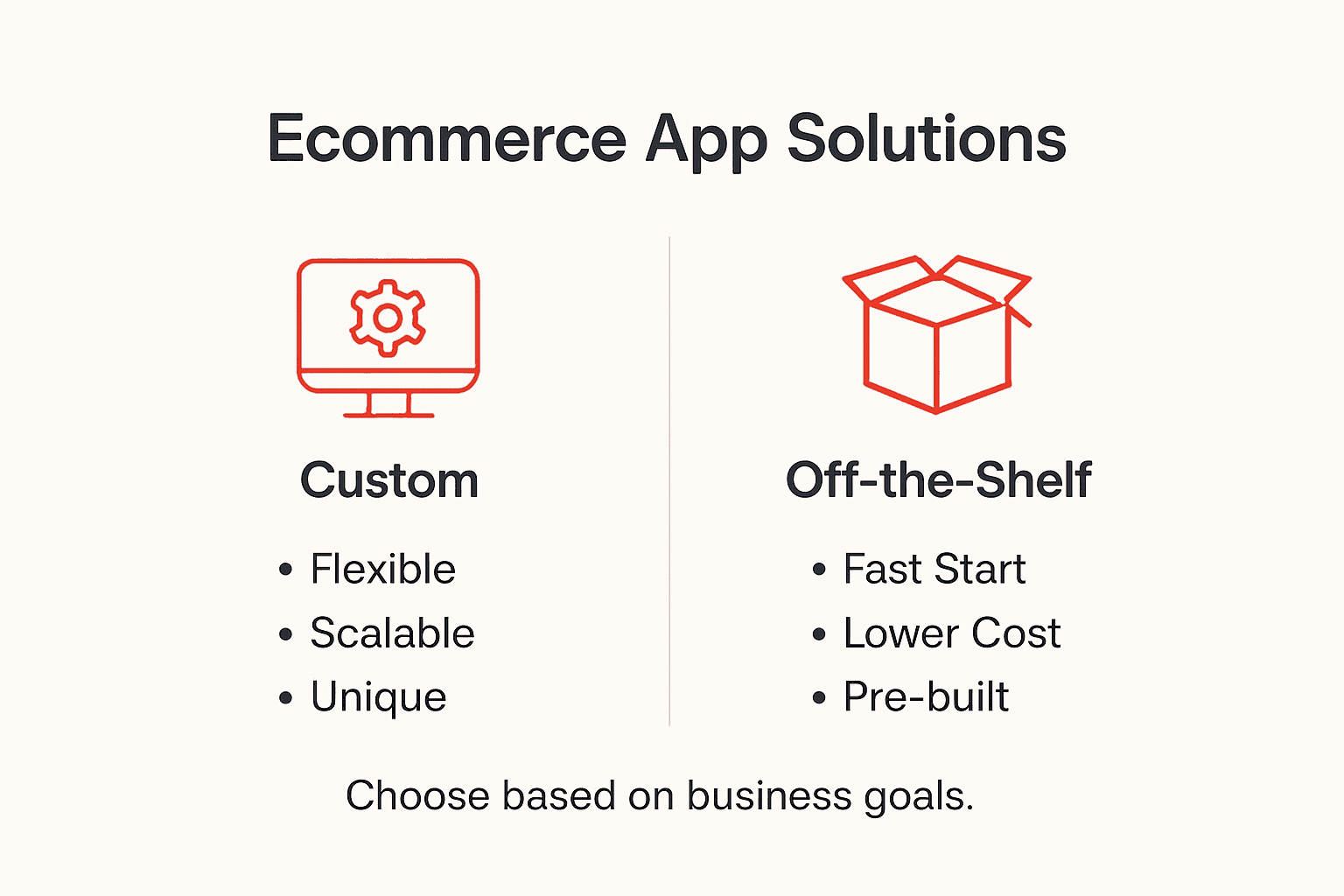
Here is a comparison of purpose-built custom web applications and off-the-shelf ecommerce platforms:
| Criteria | Custom Web Applications | Off-the-Shelf Platforms |
|---|---|---|
| Scalability | Easily adapts as business grows | Limited by vendor capabilities |
| Implementation Speed | Requires longer development time | Enables rapid market launch |
| Cost Structure | Higher upfront, flexible options | Lower initial, fixed pricing |
| Feature Flexibility | Advanced bespoke features | Standardised feature set |
| Long-term Control | Total ownership and autonomy | Restricted by vendor updates |
Pro tip: Conduct a thorough cost-benefit analysis comparing potential customisation expenses against projected operational efficiency gains before selecting your ecommerce platform strategy.
Essential Features for Growing Retail Brands
Retail brands operating in the digital marketplace must strategically design their web applications to meet increasingly sophisticated consumer expectations and competitive market demands. The digital storefront is no longer just a transactional platform but a comprehensive brand experience that requires carefully curated functionality and user-centric design.
Key features for ecommerce applications encompass a range of sophisticated user experience and operational capabilities, focusing on creating seamless, engaging digital interactions. These essential components include:
- Personalised user profiles
- Advanced product search and filtering mechanisms
- Secure and flexible payment systems
- Real-time order tracking
- Integrated customer support channels
- Responsive design across multiple devices
Successful digital retail platforms require more than basic transactional tools. Engaging websites must communicate brand value through intuitive navigation, comprehensive product information, and thoughtfully designed user interfaces that build customer confidence and encourage purchasing decisions. This means developing web applications that not only facilitate transactions but also create meaningful, memorable brand interactions.

The most effective web applications for growing retail brands go beyond standard functionality, incorporating intelligent features that anticipate and respond to customer needs. These might include personalised product recommendations, dynamic pricing strategies, seamless omnichannel experiences, and advanced analytics that provide real-time insights into customer behaviour and preferences.
Pro tip: Invest in user experience research and continuously test your web application’s features to ensure they genuinely enhance customer engagement and conversion rates.
Integrating Custom Apps with Magento and Shopify
Successful ecommerce platforms require sophisticated integration strategies that transform standalone technologies into interconnected, intelligent systems. Magento and Shopify serve as powerful foundations for digital retail ecosystems, but their true potential emerges through strategic custom application integration that enhances operational capabilities and customer experiences.
ERP integration represents a critical mechanism for transforming Magento and Shopify from isolated platforms into comprehensive business management systems, enabling seamless data synchronisation across multiple operational domains. By implementing custom integrations, businesses can achieve:
- Real-time inventory tracking
- Automated order processing
- Centralised customer data management
- Streamlined financial reporting
- Enhanced operational visibility
Custom web applications built specifically for Magento and Shopify platforms can bridge critical functionality gaps, creating tailored solutions that address unique business requirements. These integrations go beyond standard plugin capabilities, offering bespoke workflow optimisations that transform how organisations manage digital commerce operations. Sophisticated custom apps can implement complex logic, automate intricate processes, and provide nuanced insights that generic platform features cannot deliver.
The integration process demands meticulous planning, involving comprehensive analysis of existing technological infrastructure, precise API mapping, and robust security protocols. Successful implementations require deep understanding of both platform architectures, ensuring smooth data exchange and maintaining system integrity throughout the integration lifecycle.
The table below summarises the main integration benefits of custom web applications for Magento and Shopify:
| Integration Benefit | Business Impact | Example Use Case |
|---|---|---|
| Automated Order Processing | Reduces manual workload, saves time | Orders synced with warehouse systems |
| Real-time Inventory Update | Minimises overselling and stockouts | Stock levels updated every 15 minutes |
| Centralised Customer Data | Easier analysis, improved service | Unified CRM for online and retail sales |
| Enhanced Reporting | Quick financial and sales insights | Customisable dashboards for managers |
Pro tip: Prioritise modular integration approaches that allow gradual implementation and easy future scalability when developing custom applications for Magento and Shopify.
Risks, Costs, and Common Pitfalls to Avoid
Custom web application development for ecommerce platforms represents a significant strategic investment with potential rewards and inherent challenges. Business leaders must approach these projects with comprehensive understanding and strategic foresight to mitigate financial and operational risks.
Development costs are heavily influenced by multiple complex factors, including technological complexity, design requirements, and team composition, creating potential budget vulnerabilities. Key cost considerations include:
- Technology stack selection
- Design complexity
- Developer expertise and location
- Project scope and duration
- Integration requirements
- Ongoing maintenance expenses
Mitigating risks requires proactive strategies that address potential development challenges. Common pitfalls emerge from inadequate user involvement, poorly defined requirements, and inappropriate technology selections that can derail project success. Organisations must implement rigorous planning processes, conduct thorough requirements gathering, and maintain continuous stakeholder engagement throughout the development lifecycle.
Successful custom web application projects demand meticulous technical and financial planning. This includes creating comprehensive project roadmaps, establishing clear performance metrics, building flexibility into development approaches, and maintaining robust communication channels between technical teams and business stakeholders. Understanding potential risks allows businesses to develop contingency strategies that protect their technological investments and maintain project momentum.
Pro tip: Allocate a minimum 20% contingency budget and implement staged development approaches to manage financial risks in custom web application projects.
Accelerate Ecommerce Success with Bespoke Web Applications
Custom web applications are essential for ecommerce businesses looking to stand out, scale smoothly and engage customers deeply in today’s competitive marketplace. This article highlights the challenges of balancing scalability, complex integrations and user experience with cost and risk management. At Big Eye Deers, we understand that your ecommerce platform needs more than generic solutions. You require tailored digital experiences built on Magento or Shopify that align with your unique workflows, integrations and growth ambitions.
Partner with a UK-based ecommerce agency that excels in designing, building and supporting advanced custom web applications to address your most pressing challenges. We combine deep knowledge of Magento Open Source, Adobe Commerce, Hyvä frontends and B2B ecommerce with expertise in ERP integration and user-centric design using Figma. Our solutions ensure secure, high-performing, and scalable online stores crafted for long-term commercial success. Discover how we transform ecommerce strategies into powerful digital realities by visiting Big Eye Deers today. Start your journey towards a truly custom-built ecommerce platform tailored to your needs that drives conversion and retention now.
Frequently Asked Questions
What are custom web applications in ecommerce?
Custom web applications are sophisticated digital solutions tailored to meet specific business needs in ecommerce. They offer interactive experiences beyond traditional websites, allowing businesses to create unique platforms that address customer expectations and operational requirements.
How do custom web applications differ from off-the-shelf solutions?
Custom web applications provide tailored functionality and design, giving businesses control over their features and user experience. In contrast, off-the-shelf solutions offer standardised features with quicker implementation, but they may limit customisation and scalability.
What are the key features that a custom web application should have for ecommerce?
Essential features for custom web applications in ecommerce include personalised user profiles, advanced product search and filtering, secure payment systems, real-time order tracking, and integrated customer support, all designed to enhance user experience and engagement.
How can custom applications integrate with platforms like Magento and Shopify?
Custom applications can enhance platforms like Magento and Shopify by integrating with existing business systems, enabling real-time data synchronisation, automated order processing, and centralised customer data management, thus transforming standalone platforms into comprehensive business management systems.