Why Upgrade Your Ecommerce Platform Now

Upgrading an ecommerce platform can feel daunting, especially when your current system seems to cope with today’s demands. Yet the shift from legacy software to a modern platform means far more than a technical refresh—it is the foundation for stronger security, faster operations, and improved compliance with new UK regulations. By embracing higher value activities that raise revenue, security, and operational capabilities, ecommerce managers can transform the customer journey and futureproof business growth.
Table of Contents
- What Upgrading Your Ecommerce Platform Means
- Key Drivers For Ecommerce Platform Upgrades
- How Modern Platforms Transform User Experience
- Integration, Security, And Compliance Impacts
- Comparing Costs, Risks And Business Outcomes
Key Takeaways
| Point | Details |
|---|---|
| Business Transformation | Upgrading your ecommerce platform is a holistic business transformation that impacts every department, not just a technical upgrade. |
| Regulatory Compliance | New regulations require enhanced reporting and data transparency; outdated systems may not meet these demands effectively. |
| Competitive Advantage | Modern platforms provide essential features like speed and personalisation, enabling businesses to meet customer expectations and outpace competitors. |
| Cost of Delay | Postponing upgrades leads to increased technical debt, security vulnerabilities, and lost revenue opportunities. |
What Upgrading Your Ecommerce Platform Means
Upgrading your ecommerce platform is far more than just installing a newer version of software. It means reimagining how your entire operation functions, from the back-end systems that power your store to the front-end experience your customers see.
At its core, upgrading involves moving into higher value activities that directly increase revenue, security, and operational capabilities. You’re shifting from systems designed for yesterday’s challenges to platforms built for today’s opportunities.
Understanding the Scope of Change
For B2B retail brands, upgrading typically means four key transformations:
- Technology upgrades: Moving from legacy systems to modern, cloud-capable platforms that integrate seamlessly with your ERP, inventory management, and CRM systems
- Operational improvements: Streamlining workflows, automating repetitive tasks, and reducing manual errors across order processing, catalogues, and customer management
- Security enhancements: Adopting advanced protections against cyber threats, malware detection, and ensuring PCI compliance across all transactions
- Scalability enablement: Building architecture that grows with your business, supporting multi-store setups, tiered pricing, and account hierarchies without performance degradation
Many UK retail brands overlook what upgrading truly demands. It’s not a technical project—it’s a business transformation that touches every department.
From Legacy Constraints to Growth Readiness
Your current platform may handle your business today, but platforms designed years ago carry invisible costs. Outdated systems struggle with modern customer expectations, security threats, and international trade demands.
Upgrading positions you to:
- Support complex B2B workflows like custom catalogues, bulk ordering, and account-specific pricing
- Integrate with modern payment gateways, shipping providers, and third-party tools without custom workarounds
- Implement advanced features such as AI-powered search, personalisation, and lifecycle marketing
- Scale internationally with multi-currency, multi-language, and multi-region capabilities
Upgrading is about gaining control over your business operations, not just adopting new software. It unlocks capabilities that were impossible on your previous system.
Many medium to large retailers postpone upgrades because they perceive only the disruption cost. Yet staying on outdated platforms creates ongoing technical debt, security vulnerabilities, and lost revenue opportunities.

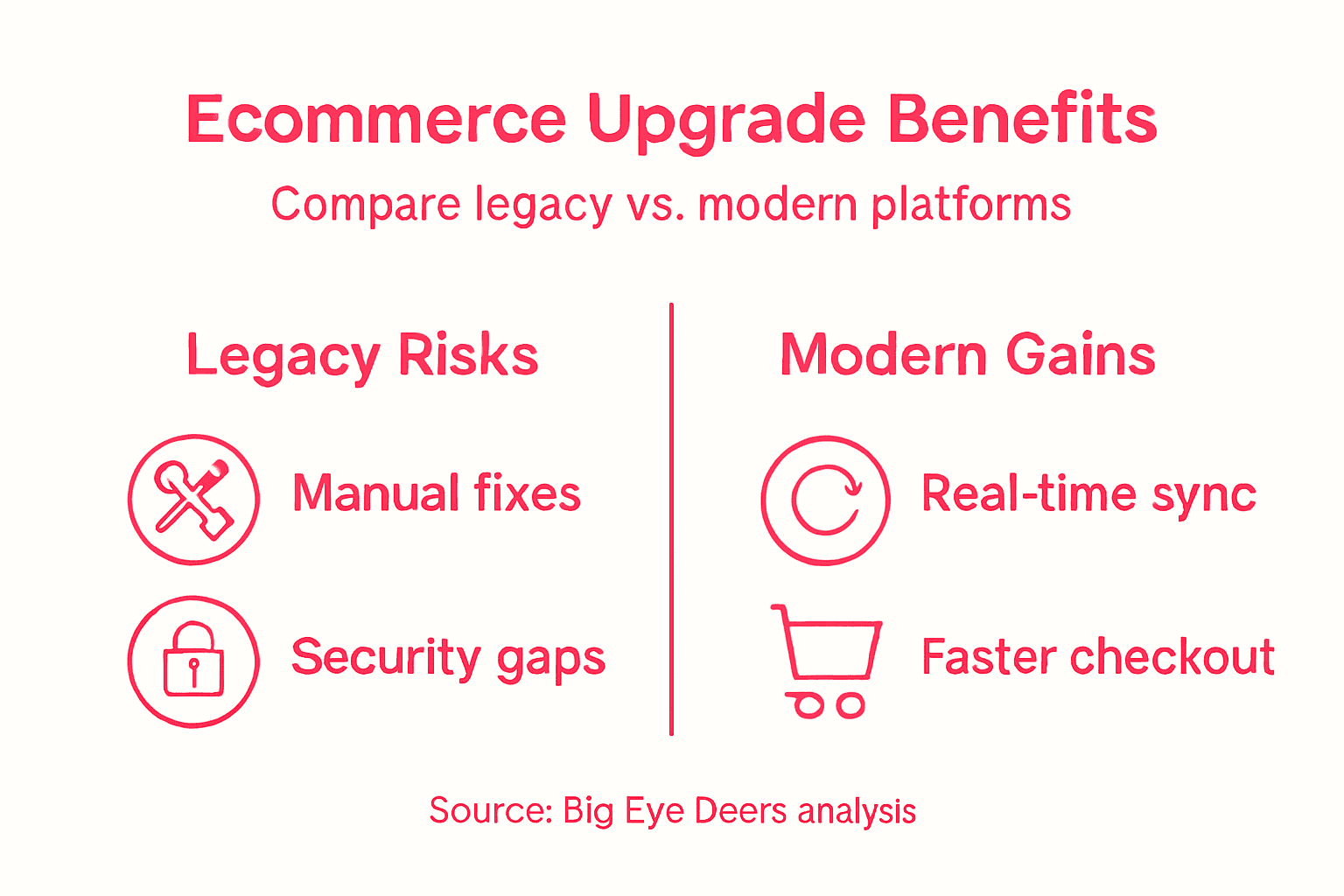
Here is a concise comparison of legacy versus modern ecommerce platforms:
| Aspect | Legacy Platforms | Modern Platforms |
|---|---|---|
| Integration | Separate, manual data entry | Real-time, seamless syncing |
| Security | Vulnerable to cyber threats | Advanced, built-in protection |
| Compliance | Manual, error-prone reporting | Automated, audit-ready logs |
| Scalability | Limits business growth | Supports expansion easily |
| User Experience | Slow, generic interfaces | Fast, personalised journey |
Why Timing Matters Right Now
The ecommerce landscape has shifted dramatically. Customer expectations for personalisation, mobile experience, and security are no longer optional. Competitors running on modern platforms are outpacing retailers still operating on legacy systems.
Moreover, regulatory requirements around data protection, PCI compliance, and consumer rights continue to tighten. Outdated platforms struggle to meet these standards, creating liability and operational headaches.
Pro tip: Before committing to an upgrade, audit your current platform against your business goals for the next 3 years—not just the next 12 months. This ensures you select a solution with genuine room to grow.
Key Drivers for Ecommerce Platform Upgrades
Several powerful forces are pushing UK retail brands to upgrade their ecommerce platforms right now. These drivers go beyond “nice to have”—they directly impact your ability to operate legally, compete fairly, and serve customers effectively.
Regulatory Compliance and Reporting Requirements
One of the most immediate drivers is compliance. The UK government has introduced new regulations requiring detailed seller reporting and tax transparency on digital platforms. These aren’t optional guidelines; they’re legal obligations that affect how you collect, store, and report customer and transaction data.
Your current platform may lack the infrastructure to meet these demands:
- Automated data collection and reporting systems for tax authorities
- Seller information verification and documentation workflows
- Audit trails and compliance logging across all transactions
- GDPR and data protection safeguards integrated at the system level
Outdated platforms force manual workarounds, creating errors and compliance risks that could result in penalties.
Competition and Market Fairness Pressures
The Competition and Markets Authority continues to scrutinise how digital platforms operate. Regulatory actions focus on improving platform fairness and transparency, requiring better interoperability and user choice.
This affects you directly. Platforms with stronger technical capabilities can adapt faster to these requirements without losing performance or customer experience. Brands operating on rigid, legacy systems struggle to implement new transparency features or integrate with emerging channels.
Performance and Security Threats
Customer expectations have shifted dramatically. Your platform must deliver:
- Mobile-first experiences that load in milliseconds
- Personalised product recommendations based on behaviour
- Secure payment processing with advanced fraud detection
- Fast checkout flows that reduce cart abandonment
Legacy platforms built five or ten years ago weren’t architected for today’s demands. They’re slow, difficult to customise, and increasingly vulnerable to cyber threats.
Your platform isn’t just a sales tool—it’s your competitive advantage. Upgrading ensures you meet regulatory requirements, customer expectations, and security standards simultaneously.
Market leaders are already moving. They’re running on modern, scalable platforms that handle these challenges as standard features, not afterthoughts.
The Cost of Delay
Postponing an upgrade creates compounding problems. You’ll face mounting technical debt, security patches that slow the system further, and lost revenue from poor performance and outdated features.
Brands that wait often spend more on temporary fixes than they would have on a proper upgrade.
Pro tip: Map your regulatory obligations, competitive gaps, and security vulnerabilities against your current platform’s capabilities. This gap analysis justifies the upgrade investment to leadership and guides your platform selection.
How Modern Platforms Transform User Experience
Modern ecommerce platforms don’t just look different—they fundamentally change how customers interact with your brand. The difference between legacy and current systems isn’t cosmetic; it’s structural and measurable.
The shift happens because modern platforms are built around user needs from the ground up. Designing with user data and iterating based on feedback creates experiences that feel intuitive rather than clunky.
Speed and Performance Matter More Than Ever
Your customers expect instant results. Modern platforms deliver pages in under two seconds, whilst legacy systems struggle to load within five. That difference drives genuine business outcomes.
Faster platforms reduce bounce rates significantly:
- Fewer customers abandon during product search
- Checkout flows complete rather than time out
- Mobile users stay engaged instead of leaving frustrated
- Search engines rank you higher for page speed
You can’t fake speed on outdated architecture. Modern platforms are built with performance as a core feature, not an afterthought.
Seamless Integration Across All Touchpoints
Today’s customers expect smooth transitions between devices and channels. They browse on mobile, compare on desktop, and complete purchases on tablet. Creating seamless, interoperable ecosystems ensures consumers access services smoothly across all platforms.
Modern platforms handle this complexity automatically. Your inventory updates instantly. Customer data syncs across channels. Cart abandonment reminders work on any device.
Legacy systems require manual workarounds that fragment the experience and create errors.
Personalisation That Actually Converts
Generic shopping experiences are dead. Customers now expect recommendations tailored to their behaviour, purchase history, and browsing patterns. Modern platforms make this standard, not premium.
Personalisation transforms metrics:
- Average order value increases 15-30% with tailored recommendations
- Repeat purchase rates climb when customers feel understood
- Cart abandonment drops when messaging reflects browsing behaviour
- Customer lifetime value grows through relevant engagement
Your platform must gather, analyse, and act on customer data in real time. Legacy systems can’t.
Accessibility and Inclusive Design
Accessible design isn’t optional anymore. It’s a legal requirement and a business advantage. Modern platforms prioritise inclusive design that works for all users, regardless of ability.
Modern platforms don’t sacrifice functionality for speed or style for substance. They deliver all three simultaneously—and that’s why they convert better.
Your competitors running modern platforms already have these advantages. Users who experience seamless, fast, personalised shopping elsewhere notice when your platform feels slow and generic.
Pro tip: Audit your current platform’s performance on actual user devices and connections. Test checkout speed, mobile responsiveness, and personalisation capabilities. These metrics reveal gaps that directly impact revenue.
Integration, Security, and Compliance Impacts
Upgrading your ecommerce platform unlocks three interconnected capabilities that directly protect your business and unlock growth. Integration, security, and compliance aren’t separate concerns—they work together to create operational resilience.
Integration: Connecting Systems That Matter
Modern platforms integrate seamlessly with the systems powering your business. Your ERP, inventory management, payment gateways, and fulfillment tools communicate automatically without manual intervention or data errors.
For B2B retailers, this integration is transformative:
- Customer orders sync instantly to your fulfillment centre
- Stock levels update across all channels in real time
- Invoices generate automatically and post to accounting systems
- Customer account hierarchies and tiered pricing apply consistently
- Reporting pulls live data rather than requiring manual compilation
Legacy platforms force manual data entry, spreadsheet management, and workarounds that waste time and create errors. Modern platforms handle this complexity as standard.
Security: Defending Against Real Threats
Cyberattacks on ecommerce platforms are constant and increasingly sophisticated. Your platform handles sensitive customer data, payment information, and business transactions. A security breach costs far more than an upgrade ever will.
Robust cybersecurity frameworks safeguard ecommerce systems from cyberattacks through multiple layers of protection. Modern platforms include:
- Advanced encryption for data in transit and at rest
- Secure authentication and session management
- Regular security patching and vulnerability assessments
- Intrusion detection and malware scanning
- PCI compliance built into the system architecture
Outdated platforms lack these protections. They’re vulnerable to known exploits, malware injection, and data theft. The cost of a breach—including regulatory fines, customer notification, and reputational damage—far exceeds upgrade investment.
Compliance: Meeting Regulatory Obligations
Regulatory requirements continue to tighten across the UK and internationally. Platforms must integrate with tax authority systems and enhance data handling capabilities to comply with evolving standards.
Your current obligations likely include:
- Tax reporting and transparency requirements
- GDPR data protection and privacy standards
- Network and Information Systems (NIS) Regulations compliance
- Consumer protection and accessibility regulations
- Payment Card Industry Data Security Standard (PCI DSS)
Modern platforms are built with compliance as a foundational feature. Upgrades ensure you’re protected against regulatory changes and audit requirements.
Security breaches and compliance failures create liability that goes beyond financial penalties—they damage customer trust permanently. Modern platforms prevent this through built-in protection.
Legacy systems require constant manual oversight, custom configurations, and external security services to maintain basic compliance. Modern platforms handle this automatically.
Pro tip: Conduct a security audit of your current platform with a third party. Document vulnerabilities, compliance gaps, and integration limitations. This audit justifies the upgrade to leadership and informs your platform selection.
Comparing Costs, Risks and Business Outcomes
Upgrading your ecommerce platform requires upfront investment. But the real question isn’t whether you can afford the upgrade—it’s whether you can afford not to. The financial picture becomes clear when you compare total costs against risks and outcomes.
Understanding Upgrade Costs
Platform upgrades involve several cost categories. Be realistic about what you’re investing in:
- Licence and software costs for the new platform and required integrations
- Implementation expenses including consulting, custom development, and data migration
- Training and change management to get your team productive on the new system
- Ongoing support and maintenance typically lower than legacy system costs
- Compliance and security enhancements built into the new platform
Most medium-sized B2B retailers see implementation costs between £50,000 and £300,000 depending on complexity. These costs are significant but temporary.
The True Cost of Not Upgrading
Postponing an upgrade creates hidden costs that compound over time. Legacy systems demand:
- Ongoing patches and workarounds for outdated functionality
- External security services to cover platform vulnerabilities
- Manual processes that waste staff time daily
- Compliance consultation fees as regulations change
- Lost revenue from poor user experience and slower performance
A single security breach costs £3,500 to £5,000 per compromised customer record on average. One breach often exceeds the entire cost of an upgrade.
Business Outcome Benefits
Successful platform upgrades deliver improved consumer trust, competitive advantage, higher sales, and compliance with legal frameworks, supporting sustainable growth. Quantifiable outcomes include:
- 20-40% improvement in site performance metrics
- 10-25% reduction in cart abandonment rates
- 15-30% increase in average order value through personalisation
- 30-50% reduction in manual order processing time
- Improved staff productivity across operations
These improvements typically generate payback within 18-36 months.
Below is a summary of business outcome benefits linked to platform upgrades:
| Outcome | Potential Impact | Timeframe for ROI |
|---|---|---|
| Site performance improvement | 20-40% faster loading & operation | 18-36 months |
| Reduced cart abandonment | 10-25% fewer abandoned checkouts | 18-36 months |
| Increased average order value | 15-30% uplift through personalisation | 18-36 months |
| Decreased manual processing time | 30-50% less staff involvement | 18-36 months |
| Enhanced consumer trust | Greater retention & loyalty | 18-36 months |
Managing Operational Resilience
Enhanced platforms help businesses manage challenges such as economic uncertainty and labour shortages through improved automation and integration. Modern systems reduce dependency on manual processes and staff, critical when finding skilled workers proves difficult.
Operational benefits compound:
- Fewer errors reduce customer service costs
- Faster processing speeds up cash flow
- Better data enables smarter business decisions
- Automation frees staff for strategic work
The upgrade cost is typically 1-3% of annual revenue for medium retailers. The cost of not upgrading is often 5-10% through lost revenue, security risks, and operational inefficiency.
Your competitors running modern platforms are already experiencing these advantages. They’re processing orders faster, converting customers better, and protecting their data more effectively.
Pro tip: Build a financial model comparing three-year costs of upgrading versus staying on your current platform. Include security breach risk costs, compliance penalties, lost revenue from poor UX, and staff time spent on workarounds. The comparison nearly always justifies the upgrade investment.
Take Control of Your Ecommerce Future Today
Upgrading your ecommerce platform is not just about adopting new software it is a fundamental business transformation that empowers you to overcome legacy constraints and meet rising customer and regulatory demands. If you are facing challenges with integration, security vulnerabilities, or sluggish user experiences the time to act is now Because outdated systems create costly risks and lost revenue opportunities Big Eye Deers specialises in delivering tailored Magento and Shopify solutions that address these exact pain points including custom catalogues, tiered pricing, seamless ERP integration and robust security protocols.

Discover how our design-led approach ensures fast, personalised, and compliant online stores built for long-term growth Explore how we turn complex challenges into scalable advantages by visiting Big Eye Deers today If you want to future-proof your ecommerce platform with expert support on every step from UX planning through to lifecycle marketing and security monitoring get in touch now to start your transformation journey
Unlock your ecommerce potential with proven expertise at Big Eye Deers and experience the difference modern platforms bring to scalability and performance.
Frequently Asked Questions
What are the key factors to consider when upgrading my ecommerce platform?
Upgrading your ecommerce platform requires consideration of technology upgrades, operational improvements, security enhancements, and scalability. These factors ensure that your business can keep up with modern demands and growth opportunities.
How does upgrading my ecommerce platform improve user experience?
Modern ecommerce platforms deliver faster page loads, personalised shopping experiences, and seamless integration across devices, which collectively enhance customer satisfaction and retention rates.
What are the risks of not upgrading my ecommerce platform?
Staying on an outdated platform can lead to increased security vulnerabilities, compliance issues, and poor user experience, resulting in lost revenue and operational inefficiencies.
How can I determine if my current ecommerce platform is adequate for my business needs?
Conduct a gap analysis comparing your current platform’s capabilities against your business goals for the next three years. Evaluate its performance, security, compliance, and integration with other systems to see if it meets modern standards.
Recommended


Adobe Commerce (Magento)
Formerly known as Magento, Adobe Commerce is built for complex catalogues, integrations, and long term growth. We design and develop stable, scalable stores that support demanding eCommerce requirements, including multi-store setups, complex pricing, and Hyva based performance improvements.

Bespoke Build
We design and build custom eCommerce platforms for businesses with complex workflows, integrations, or non standard requirements. Built from scratch around your business needs using Laravel and modern architectures.
Working with brands across the UK from our offices in Cardiff and Exeter, you deal directly with a senior team of designers and developers specialising in Shopify, Magento, WordPress and bespoke eCommerce platforms.
We focus on commercial outcomes. Better conversion rates, strong SEO foundations and eCommerce platforms that continue to improve long after launch.