Boost conversions with mobile ecommerce must-haves for UK stores
TL;DR:
- Mobile commerce dominates UK shopping, making mobile-optimized stores essential for sales.
- Key focuses include fast load times, simple navigation, and seamless checkout experiences.
- Continual testing and data-driven adjustments are vital for ongoing mobile ecommerce success.
UK shoppers now reach for their phones before their laptops, and if your store isn’t built for that reality, you’re already losing sales. Mobile commerce has moved well beyond a trend. It’s the default shopping behaviour for millions of consumers across Britain, and the gap between a well-optimised mobile store and a poorly adapted one is measured in abandoned baskets, lost revenue, and frustrated customers who simply don’t come back. This guide covers the essential must-haves for mobile ecommerce in 2026, what to look for, what to prioritise, and how to make decisions that genuinely move the needle on your conversion rate.
Table of Contents
- Establishing your mobile ecommerce criteria
- Must-have responsive and mobile design features
- Checkout, payment and mobile shopping essentials
- Mobile-specific tools, integrations and marketing must-haves
- What most experts overlook about mobile ecommerce must-haves
- Ready to optimise your mobile ecommerce?
- Frequently asked questions
Key Takeaways
| Point | Details |
|---|---|
| Responsive design essential | Every UK e-commerce site must adopt responsive design to deliver seamless mobile experiences. |
| Frictionless checkout | A streamlined checkout and multiple payment options are key to reducing cart abandonments. |
| Mobile-first tools | Integrate analytics, push notifications, and loyalty features to engage and convert mobile shoppers. |
| Continuous adaptation | Regularly test and update your mobile features to meet evolving consumer expectations. |
Establishing your mobile ecommerce criteria
Before you invest in tools, redesigns, or integrations, you need a clear set of criteria to measure what actually matters. Without a framework, it’s easy to chase features that look impressive in a demo but deliver little commercial value in practice.
The foundation of any solid mobile ecommerce strategy rests on three pillars: speed, ease of use, and accessibility. A page that takes more than three seconds to load on a 4G connection will cost you customers. Ease of use means a shopper can find, select, and buy a product using only their thumb. Accessibility ensures your store works for everyone, regardless of device age or screen size.
When evaluating your current setup or planning an upgrade, measure against these specific criteria:
- Loading times: Aim for a Largest Contentful Paint (LCP) score under 2.5 seconds on mobile
- Checkout friction: Count the number of taps required to complete a purchase from product page to confirmation
- Device compatibility: Test across iOS and Android, and across both current and older handset generations
- Payment gateways: Confirm your store supports the wallets and cards UK shoppers actually use
- Navigation clarity: Menus must be thumb-friendly, logical, and never require pinching or zooming
- Search functionality: Mobile shoppers search more than they browse, so search must be fast and accurate
Mobile commerce continues to influence purchasing decisions, and site performance must meet customer expectations to stay competitive. That’s not a vague warning. It’s a call to build your mobile site around real UK shopper habits: browsing during commutes, purchasing on lunch breaks, comparing prices in-store.
Pro Tip: Run a quick audit by asking someone unfamiliar with your store to buy a specific product on their phone. Time them and watch where they hesitate. Those hesitation points are your highest-priority fixes.
Once you have your criteria locked in, you can evaluate every subsequent decision, from design choices to tool selection, against a consistent standard.
Must-have responsive and mobile design features
Criteria give you direction. Design is where that direction becomes visible to your customers. And the first non-negotiable is a responsive layout that adapts fluidly to every screen size, from a compact iPhone SE to a large Android phablet.
Responsive design is not simply about shrinking your desktop site. It’s about rethinking the entire user journey for a smaller, touch-driven context. Your product images need to load quickly and look sharp. Your menus need to collapse into intuitive navigation patterns. Your call-to-action buttons need to be large enough to tap without error.
Here’s what we consider essential from a mobile design perspective:
- Fluid grid layouts that reflow content naturally across breakpoints
- Touch-friendly CTAs with a minimum tap target size of 44×44 pixels
- Simplified navigation using hamburger menus or bottom navigation bars
- High-quality product imagery optimised for fast loading without sacrificing clarity
- Sticky add-to-cart buttons that remain visible as users scroll through product pages
- Readable typography with a minimum body font size of 16px
“A mobile experience that forces users to pinch, zoom, or hunt for buttons isn’t just inconvenient. It’s a direct signal to your customer that you haven’t thought about them.”
Responsive design is vital for store performance and reliable mobile shopping experiences. And while traditional responsive design covers the fundamentals, progressive web app (PWA) technology pushes it further. PWAs allow your store to load near-instantly, work offline in limited capacity, and send push notifications, all without requiring a native app download. For UK retailers looking to close the gap between mobile web and app-like experiences, PWAs are worth serious consideration.
The responsive design essentials for ecommerce go deeper than aesthetics. Performance metrics like Core Web Vitals directly influence your Google search ranking on mobile, making boosting mobile store performance both a UX and an SEO priority.
Pro Tip: Use Google’s PageSpeed Insights to check your mobile Core Web Vitals score. A score below 70 on mobile is a red flag and likely costing you organic traffic as well as conversions.
Design decisions made early in the process have a long tail. Getting them right from the start, rather than retrofitting later, saves significant time and budget.
Checkout, payment and mobile shopping essentials
This is where real money is won or lost. A shopper who reaches your checkout is already motivated to buy. The job of your checkout is simply not to get in their way.
Mobile checkout abandonment is a known problem. The reasons are consistent: too many form fields, surprise costs, limited payment options, and forced account creation. Fixing these is not complicated, but it requires deliberate attention to each step.
Here are the checkout improvements that deliver the most measurable impact:
- Single-page checkout: Consolidate all steps into one scrollable page rather than a multi-step funnel
- Guest checkout: Never force account creation before purchase. Offer it as an option after the sale
- Auto-fill support: Enable browser and address auto-fill to reduce manual data entry on mobile keyboards
- Progress indicators: Show shoppers exactly where they are in the process, even on a single-page layout
- Clear error messaging: Highlight form errors inline and immediately, not after submission
- Order summary visibility: Keep a collapsible but always accessible cart summary throughout checkout
| Feature | Impact on conversion | Complexity to implement |
|---|---|---|
| Single-page checkout | High | Medium |
| Apple Pay / Google Pay | High | Low |
| Guest checkout | High | Low |
| Auto-fill forms | Medium | Low |
| Progress indicators | Medium | Low |
| Inline error validation | Medium | Medium |
Frictionless checkout and diverse payments reduce drop-off rates, and that’s backed by what we see across the stores we build and support. Offering Apple Pay, Google Pay, and PayPal alongside standard card payments is now a baseline expectation for UK mobile shoppers, not a nice-to-have.
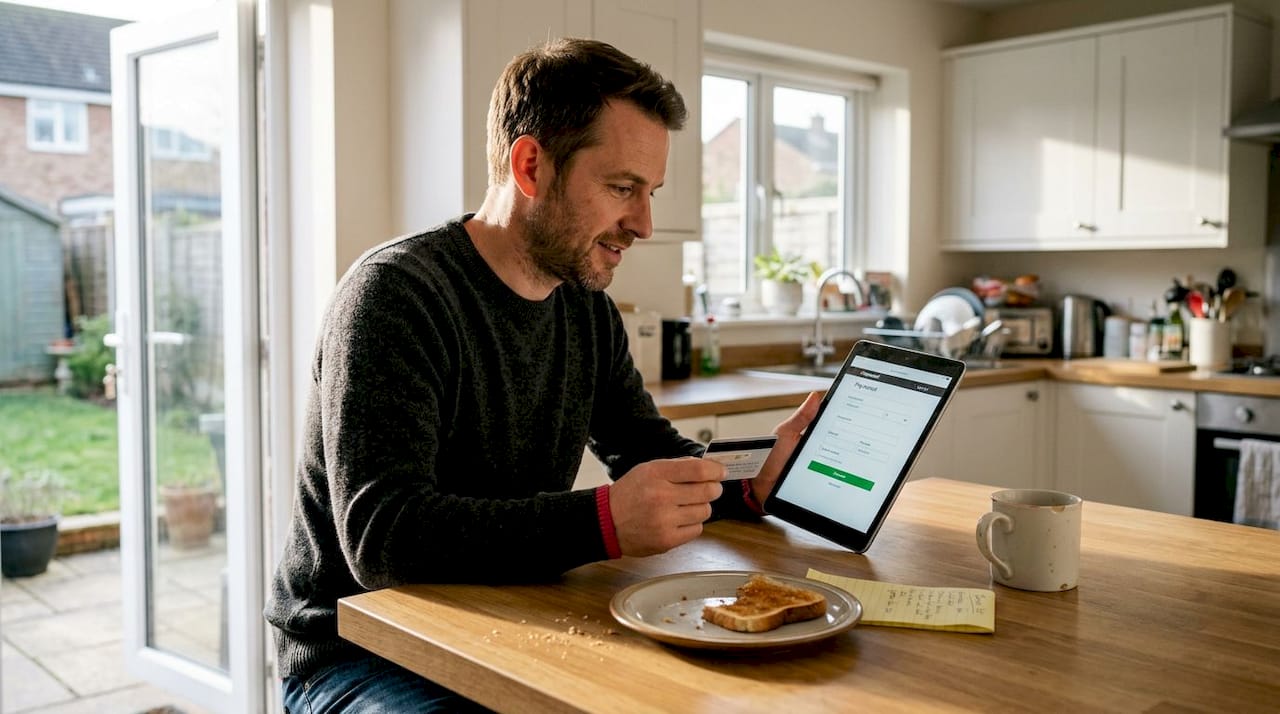
Statistic to note: Stores that add digital wallet options alongside card payments typically see a measurable lift in mobile conversion rates, particularly among younger shoppers aged 18 to 34 who rarely enter card details manually.
Applying these mobile site optimisation tips at the checkout stage alone can recover a significant portion of the revenue you’re currently leaving on the table.
Mobile-specific tools, integrations and marketing must-haves
Once your design and checkout are solid, the next layer of competitive advantage comes from the tools and integrations you layer on top. These aren’t optional extras. They’re what separates stores that plateau from stores that keep growing.
Analytics is the starting point. You need mobile-specific data: conversion rate by device, drop-off points in your mobile funnel, session duration on mobile versus desktop, and search term data from mobile users. Without this, you’re optimising blind.
Push notifications are one of the most underused tools in UK mobile ecommerce. Through progressive web apps, you can send personalised, timely nudges directly to a shopper’s phone, without them having a native app installed. Abandoned cart reminders, back-in-stock alerts, and flash sale notifications all perform strongly when personalised correctly.
Here’s a comparison of the key mobile marketing channels:
| Channel | Engagement rate | Best use case |
|---|---|---|
| Push notifications | High (opt-in) | Abandoned cart, back-in-stock |
| SMS marketing | Very high | Time-sensitive offers |
| Email (mobile-optimised) | Medium | Lifecycle campaigns |
| Social retargeting | Medium | Re-engagement |
| In-app banners | High | On-site promotions |
Other integrations worth prioritising:
- Loyalty programmes: Mobile shoppers respond well to points systems and visible rewards at checkout
- Social login: Reduce account creation friction by allowing login via Google or Apple
- Klevu search: Intelligent on-site search that learns from mobile browsing patterns and improves product discovery
- Klaviyo: Lifecycle marketing automation that connects mobile behaviour to targeted email and SMS sequences
Mobile-specific tools and integrations create better shopping experiences and allow informed marketing decisions. The key is to integrate selectively. Every tool you add should earn its place by improving a measurable metric, not by ticking a feature box.
Pro Tip: Start with analytics and push notifications before anything else. If you can see where mobile shoppers drop off and then re-engage them directly, you’ll generate enough data to justify every subsequent investment.
These mobile site tips apply whether you’re running Shopify or Magento, and the right integrations will differ by platform and business model.
What most experts overlook about mobile ecommerce must-haves
Here’s the uncomfortable truth: most articles on mobile ecommerce must-haves hand you a static checklist and call it done. That’s useful as a starting point, but it misses the bigger picture entirely.
The stores we’ve worked with across the UK that saw the most significant conversion improvements weren’t the ones who ticked every box. They were the ones who tested relentlessly. A small change to a CTA label. A reordered checkout field. A different default payment option. These micro-adjustments, driven by real user data rather than best-practice assumptions, consistently outperformed large-scale redesigns.
No single set of must-haves fits every UK business. A fashion retailer and a B2B trade supplier have different mobile audiences, different buying cycles, and different friction points. What works brilliantly for one may be irrelevant for the other.
Our advice: treat any framework, including this one, as a hypothesis to be tested, not a prescription to be followed. Use your setup workflow insights to build continuous feedback loops into your mobile strategy. Measure, adapt, and measure again. That discipline is worth more than any single feature you could implement.
Ready to optimise your mobile ecommerce?
If reading this has surfaced a gap or two in your mobile setup, you’re not alone. Most UK stores have strong foundations in some areas and meaningful blind spots in others.
At Big Eye Deers, we help UK retailers get ecommerce right by designing, building, and optimising stores that perform on every device. Whether you’re running a Shopify agency solutions setup or a complex Magento design expertise build, we bring 17 years of hands-on experience to help you close the gap between where your mobile store is now and where it needs to be. Get in touch with our team and let’s look at what your mobile experience is currently costing you.
Frequently asked questions
What is the most important mobile ecommerce must-have in the UK?
Responsive design remains the most crucial feature, as it ensures a consistent, reliable shopping experience across every mobile device your customers use.
How can I reduce mobile cart abandonment rates?
Streamlining checkout to fewer steps and offering familiar payment options like Apple Pay and PayPal removes the most common barriers. Frictionless checkout directly reduces drop-off at the final stage.
Are push notifications effective for UK mobile ecommerce?
Yes, particularly for recovering abandoned carts and promoting time-sensitive offers. Mobile-specific integrations like PWA push notifications deliver strong engagement when messages are personalised and relevant.
Which payment gateways should UK stores integrate for mobile?
Apple Pay, Google Pay, PayPal, and standard card payments cover the vast majority of UK shopper preferences. Offering all four ensures you don’t lose a sale over a missing payment method.
How will mobile ecommerce trends affect my business in 2026?
As mobile purchasing behaviour continues to dominate, stores without a mobile-first strategy will increasingly struggle to compete on conversion rates and customer retention.
Recommended



Adobe Commerce (Magento)
Formerly known as Magento, Adobe Commerce is built for complex catalogues, integrations, and long term growth. We design and develop stable, scalable stores that support demanding eCommerce requirements, including multi-store setups, complex pricing, and Hyva based performance improvements.

Bespoke Build
We design and build custom eCommerce platforms for businesses with complex workflows, integrations, or non standard requirements. Built from scratch around your business needs using Laravel and modern architectures.

Working with brands across the UK from our offices in Cardiff and Exeter, you deal directly with a senior team of designers and developers specialising in Shopify, Magento, WordPress and bespoke eCommerce platforms.
We focus on commercial outcomes. Better conversion rates, strong SEO foundations and eCommerce platforms that continue to improve long after launch.