Role of Branding in Ecommerce Success for UK Retailers

Standing out in the crowded world of digital retail often feels like a test of identity rather than just design. For UK ecommerce managers, getting the essentials of modern branding right means far more than picking a logo. It is about shaping every customer touchpoint into a genuine interaction that attracts, reassures, and invites repeat business. This article offers actionable insights to help refine your brand identity, drive stronger conversion rates, and build lasting customer loyalty across every digital channel.
Table of Contents
- Defining Branding In Modern Ecommerce
- Types Of Ecommerce Branding For Retailers
- Key Elements Of An Effective Brand Identity
- Impact On Customer Trust And Conversion Rates
- Common Mistakes And Effective Branding Solutions
- Branding For Long-Term Retention And Advocacy
Key Takeaways
| Point | Details |
|---|---|
| Holistic Branding Approach | Modern ecommerce branding involves creating authentic narratives and emotional connections with consumers through all digital touchpoints. |
| Importance of Consistency | Consistent visual identity and messaging across platforms are essential for building customer trust and recognition. |
| Customer-Centric Strategies | Personalised experiences and transparent communication are crucial for fostering long-term customer loyalty and advocacy. |
| Continuous Evaluation | Regular brand audits and performance reviews help ensure alignment with market dynamics and customer expectations. |
Defining branding in modern ecommerce
Branding in ecommerce represents far more than a simple logo or visual identity. It’s a comprehensive strategic approach that communicates a retailer’s core values, personality, and unique market positioning through every digital interaction. Contemporary branding strategies have evolved dramatically, moving beyond traditional marketing techniques to create immersive, interactive consumer experiences.
In the digital landscape, brand perception is shaped through multiple touchpoints. These include website design, product imagery, customer service interactions, social media presence, packaging, and even post-purchase communication. Each interaction contributes to building a cohesive narrative that differentiates a retailer from competitors.
Key elements of modern ecommerce branding include:
- Consistent visual language across all digital platforms
- Authentic storytelling that resonates with target audience values
- Personalised customer experiences
- Clear communication of brand purpose and mission
- Responsive and engaging digital interactions
Successful UK retailers understand that branding is no longer about broadcasting a message, but creating a meaningful dialogue with consumers. This means developing a brand identity that feels genuine, adaptable, and capable of forming emotional connections in an increasingly digital marketplace.
Pro tip: Conduct a comprehensive brand audit every six months to ensure your digital presence remains aligned with your core brand values and customer expectations.
Types of ecommerce branding for retailers
Ecommerce branding is a multifaceted discipline that encompasses various strategic approaches designed to differentiate retailers in a competitive digital marketplace. Strategic brand development involves creating a comprehensive identity that extends far beyond visual aesthetics, focusing on communicating a retailer’s unique value proposition across multiple digital channels.
Retailers can leverage several distinct types of branding strategies to establish their market presence:
Here’s a comparison of ecommerce branding approaches and their strategic outcomes:
| Branding Type | Focus Area | Core Benefit |
|---|---|---|
| Product-Centric | Product distinctions | Highlights unique features |
| Purpose-Driven | Broader mission | Builds ethical reputation |
| Personality-Based | Distinct brand character | Humanises brand image |
| Experience-Oriented | Customer interactions | Fosters lasting memories |
| Technology-Enabled | Digital innovation | Enhances user engagement |
- Product-Centric Branding: Focuses on highlighting unique product features and quality
- Purpose-Driven Branding: Emphasises the retailer’s broader social or environmental mission
- Personality-Based Branding: Develops a distinct brand voice and character
- Experience-Oriented Branding: Prioritises creating memorable customer interactions
- Technology-Enabled Branding: Leverages innovative digital tools and platforms
The most successful UK ecommerce brands understand that effective branding requires a holistic approach. By exploring diverse sales channels, retailers can craft a nuanced brand strategy that resonates across websites, social media platforms, and online marketplaces. This multi-channel approach ensures consistent messaging and helps build a comprehensive brand identity that connects emotionally with target consumers.
Modern ecommerce branding demands continuous adaptation. Retailers must remain agile, regularly reassessing their brand positioning, visual language, and customer communication strategies to stay relevant in an ever-evolving digital landscape.
Pro tip: Conduct quarterly brand performance reviews to ensure your ecommerce branding strategy remains aligned with changing market dynamics and customer expectations.
Key elements of an effective brand identity
Creating a compelling brand identity requires a strategic approach that goes beyond superficial design elements. Comprehensive brand development involves crafting a holistic narrative that communicates a retailer’s core values, personality, and unique market positioning across all digital touchpoints.

The fundamental elements of a robust brand identity include:
For clarity, here’s how key brand identity elements influence business performance:
| Brand Element | Direct Impact on Business |
|---|---|
| Visual Identity | Improved brand recognition |
| Brand Voice | Cohesive communication |
| Core Values | Customer alignment |
| Customer Promise | Enhanced satisfaction |
| Emotional Connection | Increased loyalty |
- Visual Identity: Consistent colour palette, typography, and logo design
- Brand Voice: Distinctive communication style and tone
- Core Values: Clear articulation of organisational purpose and beliefs
- Customer Promise: Explicit commitment to customer experience
- Emotional Connection: Strategies for creating meaningful consumer relationships
Successful UK ecommerce brands understand that brand identity development is a dynamic process requiring continuous refinement. This means regularly auditing brand performance, monitoring customer perceptions, and adapting communication strategies to remain relevant in an increasingly competitive digital marketplace.
The most effective brand identities transcend mere visual aesthetics, becoming powerful narratives that resonate emotionally with target consumers. They communicate not just what a brand sells, but why it exists and how it can meaningfully improve customers’ lives.
Pro tip: Develop a comprehensive brand guideline document that serves as a consistent reference point for all marketing and communication efforts across your organisation.
Impact on customer trust and conversion rates
Branding plays a pivotal role in establishing customer trust and driving conversion rates for UK ecommerce retailers. Consumer trust dynamics reveal that transparent, consistent brand communication directly influences purchasing decisions and customer confidence.
Key elements that impact trust and conversion include:
- Transparency: Clear pricing and product information
- Consistent Messaging: Unified brand voice across all channels
- Social Proof: Customer reviews and testimonials
- Visual Credibility: Professional design and user experience
- Ethical Communication: Honest marketing practices
Regulatory compliance in online practices significantly influences consumer trust. The Competition and Markets Authority’s guidelines emphasise the importance of fair pricing and preventing misleading marketing tactics, which directly correlate with increased conversion rates.
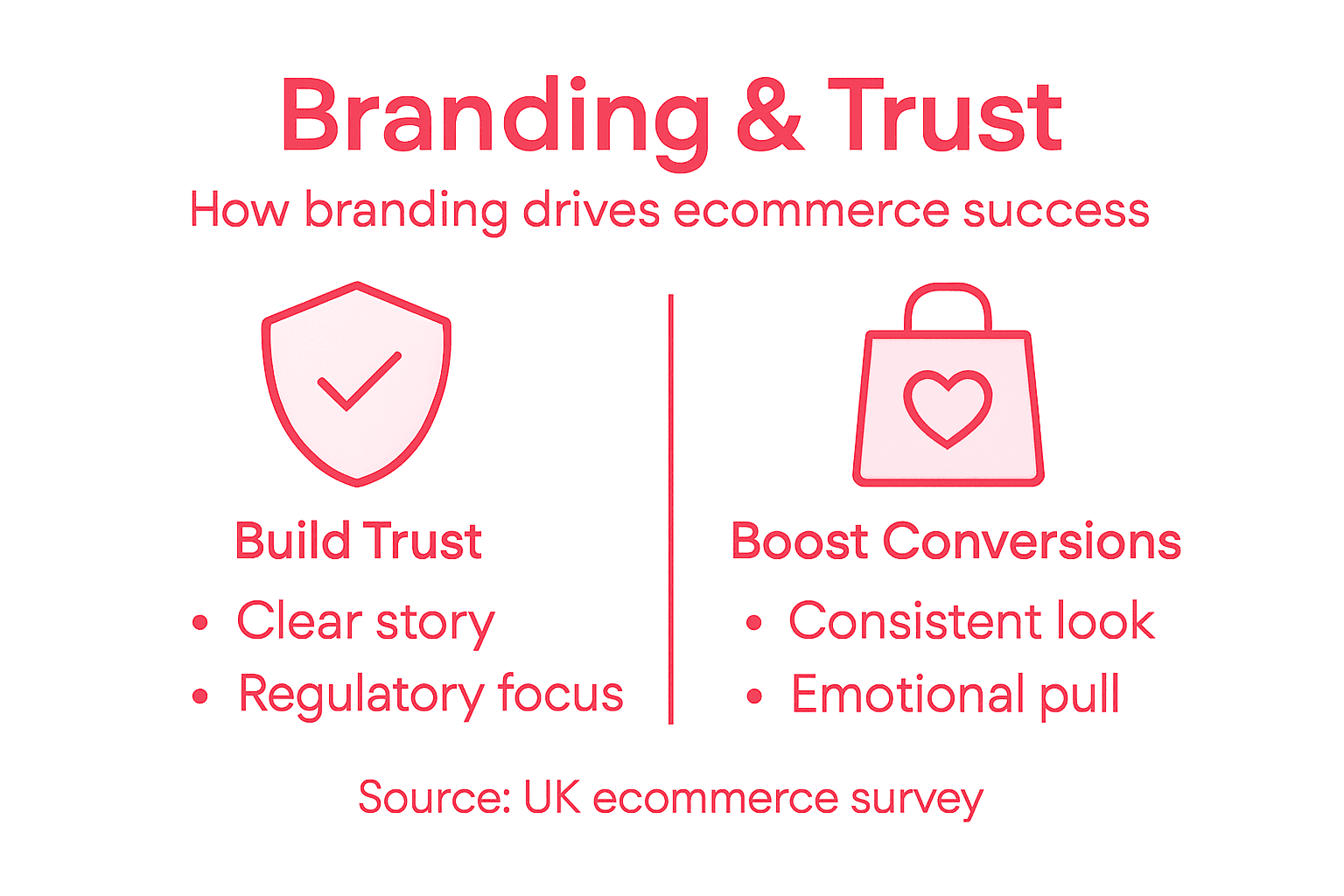
Emotional connection remains the most powerful trust-building mechanism. Successful ecommerce brands create narratives that go beyond transactional relationships, establishing genuine connections that transform casual browsers into loyal customers. This approach requires consistent demonstration of brand values, reliability, and commitment to customer satisfaction.
Pro tip: Implement a transparent customer feedback system that publicly demonstrates your commitment to continuous improvement and customer experience.
Common mistakes and effective branding solutions
Ecommerce branding requires strategic navigation through potential pitfalls that can significantly undermine a retailer’s reputation. Consumer protection guidelines highlight several critical areas where UK retailers frequently stumble in their brand communication and online presence.
Common branding mistakes include:
- Inconsistent visual identity across platforms
- Misleading product descriptions
- Lack of transparency in pricing
- Poorly designed user experience
- Neglecting customer feedback mechanisms
- Inauthentic or overly generic brand messaging
Electronic commerce regulations provide clear frameworks for avoiding these pitfalls. Effective branding solutions require a comprehensive approach that prioritises customer trust, legal compliance, and genuine communication.
Successful UK retailers understand that brand credibility is built through consistent, transparent, and customer-centric practices. This means developing clear communication strategies, maintaining visual and messaging coherence, and demonstrating a genuine commitment to customer satisfaction beyond mere transactional interactions.
Pro tip: Conduct monthly brand audits to identify and rectify potential inconsistencies in your online brand presentation and customer communication strategies.
Branding for long-term retention and advocacy
Building lasting customer relationships requires more than transactional interactions; it demands a strategic approach to brand development that resonates deeply with consumers. Consistent brand communication serves as the fundamental mechanism for transforming casual customers into passionate brand advocates.
Key strategies for long-term customer retention include:
- Developing a compelling brand narrative
- Creating personalised customer experiences
- Demonstrating genuine commitment to customer values
- Maintaining transparent and authentic communication
- Implementing responsive feedback mechanisms
- Continuous brand evolution aligned with customer expectations
Strategic brand management emphasises the importance of adaptability while preserving core brand essence. Successful UK retailers understand that loyalty is earned through consistent demonstration of brand promises, emotional connection, and a genuine commitment to customer success.
Modern ecommerce brands must view retention as an ongoing dialogue, not a one-time transaction. This requires sophisticated relationship-building techniques that go beyond traditional marketing, focusing on creating meaningful, value-driven interactions that make customers feel genuinely understood and appreciated.
Pro tip: Implement a dynamic customer feedback loop that allows continuous brand refinement based on genuine consumer insights and evolving market expectations.
Elevate Your Ecommerce Brand with Expert Design and Support
Building a strong, authentic brand that connects emotionally with your target audience is essential to ecommerce success in the UK market. The article highlights key challenges such as maintaining consistent visual identity, delivering personalised customer experiences, and continuously adapting your brand to evolving market dynamics. At Big Eye Deers, we understand these critical pain points and bring over 17 years of expertise in designing and building high-performing online stores tailored to your unique brand values.
Transform your brand with our comprehensive ecommerce solutions that prioritise UX, performance, and conversion. From bespoke Magento and Shopify developments to advanced B2B functionalities and seamless ERP integrations, we ensure your digital presence reflects your core brand promise while driving loyalty and growth. Don’t let inconsistent messaging or outdated technology hold you back. Visit Big Eye Deers today to partner with a team committed to crafting secure, scalable platforms designed for long-term retention and advocacy. Explore how our expertise in lifecycle marketing with Klaviyo and powerful onsite search tools can enhance your customer engagement and elevate your brand narrative now.
Frequently Asked Questions
What is the importance of branding in ecommerce?
Branding in ecommerce is crucial as it encompasses a retailer’s core values, personality, and market positioning, significantly impacting customer perception and loyalty.
How can retailers improve their brand identity in the digital landscape?
Retailers can enhance their brand identity by maintaining a consistent visual language, developing an authentic narrative, and ensuring engaging and personalised customer experiences across all platforms.
What are common mistakes in ecommerce branding?
Common mistakes include inconsistent visual identity, misleading product descriptions, lack of transparency in pricing, neglecting customer feedback, and using inauthentic messaging.
How does branding affect customer trust and conversion rates?
Effective branding builds customer trust through transparency and consistent messaging, which can lead to higher conversion rates by establishing genuine connections and enhancing customer satisfaction.
Recommended



Adobe Commerce (Magento)
Formerly known as Magento, Adobe Commerce is built for complex catalogues, integrations, and long term growth. We design and develop stable, scalable stores that support demanding eCommerce requirements, including multi-store setups, complex pricing, and Hyva based performance improvements.

Bespoke Build
We design and build custom eCommerce platforms for businesses with complex workflows, integrations, or non standard requirements. Built from scratch around your business needs using Laravel and modern architectures.

Working with brands across the UK from our offices in Cardiff and Exeter, you deal directly with a senior team of designers and developers specialising in Shopify, Magento, WordPress and bespoke eCommerce platforms.
We focus on commercial outcomes. Better conversion rates, strong SEO foundations and eCommerce platforms that continue to improve long after launch.