Why Choose Magento for UK Ecommerce Success

Managing a fast-growing online store in the United Kingdom often means choosing technology that can keep pace with changing business demands and customer expectations. For ecommerce managers looking to balance sophisticated B2B operations with seamless user experience, selecting the right platform is a serious decision. With its open-source flexibility and scalable architecture, Magento has become a top contender for British retailers who require robust site performance and strong customisation to support ambitious growth and complex B2B requirements.
Table of Contents
- Magento’s Place In UK Ecommerce Platforms
- Essential Features For Growing Online Stores
- Advanced B2B Capabilities And Customisation
- Security, Compliance And Performance Essentials
- Integration, Support And Cost Considerations
- Comparing Magento To Other Platforms
Key Takeaways
| Point | Details |
|---|---|
| Magento’s Flexibility | Magento provides both a free open-source version and a premium edition, catering to businesses of all sizes. This flexibility supports scalable digital commerce solutions tailored to diverse business needs. |
| B2B Capabilities | The platform’s advanced B2B functionality offers custom pricing, bulk order management, and account structures, facilitating complex procurement processes for businesses. |
| Security and Compliance | Magento incorporates robust security features and compliance support, essential for safeguarding sensitive data and meeting UK regulatory standards. |
| Cost Considerations | Businesses must budget for licensing, development, and ongoing support when implementing Magento, reflecting its enterprise-grade capabilities and scalability potential. |
Magento’s Place in UK Ecommerce Platforms
Magento has firmly established itself as a leading ecommerce platform within the United Kingdom’s digital retail landscape. Leading open-source ecommerce solutions provide UK businesses with robust technological foundations for creating sophisticated online stores across multiple sectors and business sizes.
The platform’s remarkable flexibility makes it particularly attractive for UK retailers seeking scalable digital commerce solutions. Magento offers two primary versions: a free open-source edition perfect for smaller enterprises, and Adobe Commerce, a premium solution packed with advanced features for larger organisations. Its architecture supports complex product catalogues, multiple store configurations, and sophisticated integrations that meet the nuanced requirements of British online merchants.
What distinguishes Magento in the UK market is its comprehensive ecosystem of developers, extensible architecture, and powerful customisation capabilities. Scalable ecommerce platforms enable businesses to build unique digital experiences tailored to their specific commercial strategies. Key strengths include:
- Headless commerce architecture
- Progressive Web Application support
- Extensive API integration possibilities
- Robust SEO tools
- Advanced B2B functionality
Pro tip: When selecting an ecommerce platform, prioritise solutions that offer both immediate functionality and long-term technological adaptability to support your business growth.
Essential Features for Growing Online Stores
Online retailers in the UK require sophisticated technological capabilities to compete effectively in an increasingly digital marketplace. Ecommerce UX strategies play a critical role in transforming website visitor engagement into sustainable commercial success.

Magento offers several essential features that enable businesses to scale their digital operations efficiently. Multi-store management allows retailers to operate multiple online storefronts from a single administrative interface, supporting complex business models like wholesale, retail, and international trading. This capability is particularly powerful for growing businesses seeking to expand their market reach without managing multiple disparate systems.
Key features that support online store growth include:
- Advanced inventory management systems
- Flexible pricing configuration
- Comprehensive customer segmentation tools
- Robust reporting and analytics
- Seamless third-party integrations
Moreover, Magento’s architecture supports multi-store ecommerce strategies that enable businesses to create unique experiences across different brands, regions, or customer groups. This flexibility ensures that growing online stores can adapt their digital platforms precisely to their evolving commercial requirements.
Pro tip: Invest time in understanding your platform’s advanced features before implementation to maximise your technological investment and minimise potential integration challenges.
Below is a summary of how Magento’s key features benefit growing UK online retailers:
| Magento Feature | Business Impact | Typical UK Use Case |
|---|---|---|
| Multi-store management | Simplifies operations for expansion | Manages multiple brands |
| Advanced inventory tools | Optimises stock and fulfilment | Supports complex catalogues |
| Customer segmentation | Increases targeted marketing | Personalised promotions |
| Third-party integrations | Streamlines business workflows | Connects to ERP or CRM |
Advanced B2B Capabilities and Customisation
Magento stands out in the UK market by offering sophisticated B2B ecommerce solutions that address the complex requirements of business-to-business digital trading. Complex B2B ecommerce strategies enable organisations to create highly tailored online experiences that match intricate procurement processes and enterprise purchasing workflows.
The platform’s advanced customisation capabilities allow businesses to develop unique digital commerce environments that reflect their specific operational structures. Key B2B functionalities include account hierarchies, custom price lists, negotiated pricing mechanisms, and granular permission settings that enable precise control over organisational purchasing workflows. These features are particularly valuable for UK enterprises managing complex multi-divisional purchasing arrangements.
Magento’s B2B capabilities extend beyond standard transactional features, offering comprehensive tools for advanced business interactions:
- Personalised customer group pricing
- Bulk order management
- Company account structures
- Quote management systems
- Custom catalogues per customer segment
Enterprise ecommerce solutions demonstrate how technological flexibility can transform business purchasing experiences. The platform’s modular architecture ensures that businesses can continuously evolve their digital commerce capabilities without requiring complete system redesigns.
Pro tip: Conduct a comprehensive audit of your current B2B procurement processes before implementing platform customisations to ensure maximum alignment between technological capabilities and organisational requirements.
Security, Compliance and Performance Essentials
For UK ecommerce businesses, robust security and performance are non-negotiable requirements in today’s digital marketplace. Enterprise ecommerce solutions must provide comprehensive protection against evolving cyber threats while maintaining exceptional site performance and user experience.
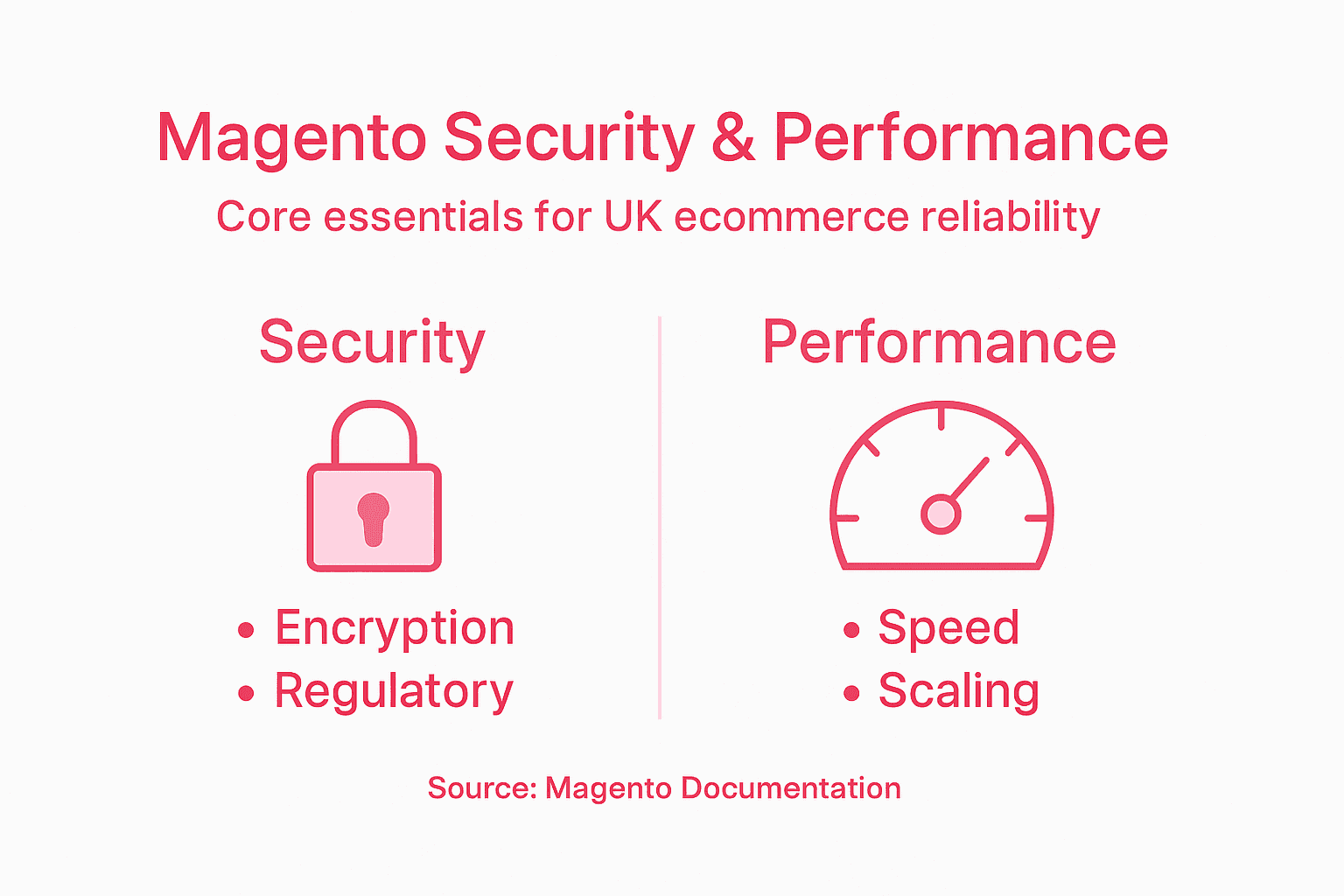
Magento’s architecture incorporates multiple layers of security mechanisms designed to protect sensitive business and customer data. These include advanced encryption protocols, secure payment gateways, two-factor authentication, and granular access controls that prevent unauthorised system interactions. Compliance features are equally sophisticated, supporting PCI DSS requirements, GDPR regulations, and other critical UK data protection standards.
Key security and performance essentials include:
- Real-time malware detection
- Automated security patching
- Robust firewall configurations
- Performance optimisation tools
- Scalable hosting infrastructure
- Regular vulnerability assessments
The platform’s modular design enables businesses to implement Magento enterprise solutions that can be tailored to specific security and performance requirements. This approach allows organisations to create resilient digital commerce environments that can quickly adapt to emerging technological challenges and regulatory landscapes.
Pro tip: Implement a proactive security strategy that includes regular penetration testing, continuous monitoring, and staff training to minimise potential vulnerability exposures.
Integration, Support and Cost Considerations
Magento’s comprehensive ecosystem demands strategic financial planning and robust integration capabilities for UK businesses. Magento developer costs represent a critical consideration for organisations evaluating platform implementation, with expenses varying significantly based on project complexity and technical requirements.
The platform’s integration landscape encompasses multiple critical dimensions, including enterprise resource planning connections, payment gateway integrations, shipping management systems, and customer relationship management platforms. These integrations require specialised technical expertise, typically involving PHP developers with specific Magento architectural knowledge. Businesses must budget for initial integration work, ongoing maintenance, and potential customisation to ensure seamless operational workflows.
Key integration and support considerations include:
- Comprehensive API documentation
- Third-party extension marketplace
- Robust developer community support
- Scalable integration frameworks
- Modular architecture flexibility
- Regular platform update mechanisms
Cost structures for Magento implementations typically involve multiple components:
- Platform licensing
- Development and customisation expenses
- Hosting infrastructure
- Ongoing technical support
- Security and maintenance
The total investment reflects the platform’s enterprise-grade capabilities, offering UK businesses a powerful digital commerce solution that supports complex operational requirements.
Pro tip: Conduct a comprehensive total cost of ownership analysis, considering not just initial implementation expenses but long-term scalability and potential return on investment.
Comparing Magento to Other Platforms
UK ecommerce businesses face critical platform selection decisions that can fundamentally impact their digital trading capabilities. Shopify versus Magento comparisons reveal nuanced differences that make each platform suitable for distinct business requirements, challenging the notion of a universal solution.
Magento distinguishes itself through unparalleled customisation capabilities, offering enterprise-grade flexibility that platforms like Shopify cannot match. While Shopify provides a more straightforward, user-friendly experience ideal for smaller retailers, Magento delivers comprehensive architectural control that enables complex digital commerce strategies. This makes Magento particularly attractive for UK businesses with sophisticated operational models, multiple sales channels, or intricate product catalogues.
Key comparative advantages of Magento include:
- Open-source architecture
- Advanced customisation potential
- Enterprise-level scalability
- Comprehensive B2B functionality
- Deeper technical control
- More extensive integration options
In contrast, alternative platforms typically offer:
- Simpler setup processes
- Lower initial technical barriers
- More templated design approaches
- Faster initial deployment
- Lower upfront development costs
The choice between Magento and other platforms ultimately depends on specific organisational requirements, technical capabilities, and long-term strategic objectives.
The following table contrasts Magento with popular alternative ecommerce platforms:
| Aspect | Magento | Shopify/Other Alternatives |
|---|---|---|
| Technical control | Highly customisable architecture | Mainly template-based, limited |
| B2B capabilities | Advanced, enterprise focused | Generally basic or limited |
| Initial deployment | Longer, requires specialists | Rapid, user-friendly setup |
| Scalability | Suits large, complex operations | Best for small to medium shops |
Pro tip: Conduct a thorough assessment of your current and anticipated business needs, evaluating platform capabilities against your specific growth and operational complexity requirements.
Unlock Your UK Ecommerce Potential with Expert Magento Solutions
The article emphasises how Magento’s powerful customisation, advanced B2B functionality, and scalable multi-store capabilities provide UK retailers with the tools they need to thrive in a competitive digital market. If you are seeking to transform complex product catalogues, streamline bulk order management, or build personalised customer experiences, aligning those needs with expert platform implementation is crucial. Common challenges such as integrating ERP systems, ensuring robust security compliance, and maintaining smooth performance can slow growth without specialist support.
Big Eye Deers understands these pain points and delivers tailored Magento ecommerce solutions designed for UK businesses aiming for long-term success. With over 17 years of experience, we bring strategic insight into building secure, scalable, and high-performing online stores, including expertise in custom catalogues, tiered pricing, account hierarchies, and more. Our focus on user experience and performance optimisation helps convert visitors into loyal customers while protecting your platform with proactive security measures.
Elevate your ecommerce strategy today by exploring how our Magento expertise can resolve your unique challenges. Discover the benefits of partnering with a UK-based agency committed to delivering complex Magento and Adobe Commerce projects at scale.

Ready to build an ecommerce platform that grows with your business and meets your specific B2B or DTC needs? Contact Big Eye Deers now to start your journey towards UK ecommerce success and experience the difference expert Magento support can make.
Frequently Asked Questions
What are the key features of Magento that benefit online retailers?
Magento offers essential features such as multi-store management, advanced inventory management, customer segmentation tools, third-party integrations, and robust reporting and analytics that enable efficient scaling of online operations.
How does Magento support B2B ecommerce?
Magento provides advanced B2B functionality including personalised pricing, bulk order management, custom account structures, and quote management systems, allowing businesses to create tailored digital experiences for their customers.
How does Magento ensure security for ecommerce businesses?
Magento incorporates multiple layers of security mechanisms, including advanced encryption, secure payment gateways, two-factor authentication, and compliance with data protection standards like PCI DSS and GDPR to protect sensitive information.
What considerations should businesses keep in mind regarding Magento costs?
When budgeting for Magento, businesses should consider platform licensing, development and customisation expenses, hosting infrastructure, ongoing technical support, and regular security maintenance. Calculating the total cost of ownership is crucial for understanding long-term financial impacts.
Recommended



Adobe Commerce (Magento)
Formerly known as Magento, Adobe Commerce is built for complex catalogues, integrations, and long term growth. We design and develop stable, scalable stores that support demanding eCommerce requirements, including multi-store setups, complex pricing, and Hyva based performance improvements.

Bespoke Build
We design and build custom eCommerce platforms for businesses with complex workflows, integrations, or non standard requirements. Built from scratch around your business needs using Laravel and modern architectures.
Working with brands across the UK from our offices in Cardiff and Exeter, you deal directly with a senior team of designers and developers specialising in Shopify, Magento, WordPress and bespoke eCommerce platforms.
We focus on commercial outcomes. Better conversion rates, strong SEO foundations and eCommerce platforms that continue to improve long after launch.