How to Create Scalable Ecommerce Site for Growth Success

Scaling an online retail store in the United Kingdom can quickly expose gaps in platform flexibility and performance that hold back growth. For Ecommerce managers and IT directors, mapping out a technical architecture tailored to real business needs is vital. By prioritising modularity and interoperability and referencing standards published by the UK government, you can lay the right foundations for seamless Magento or Shopify expansion. This guide offers step by step insight on building a scalable platform while focusing on user experience and robust security.
Table of Contents
- Step 1: Define Platform Requirements For Scalability
- Step 2: Plan UX And Architecture Using Figma
- Step 3: Implement Robust Hosting And Integrations
- Step 4: Optimise Performance And Onsite Search
- Step 5: Secure And Verify Your Ecommerce Platform
Quick Summary
| Key Point | Explanation |
|---|---|
| 1. Establish Scalable Platform Requirements | Map current business needs and future growth to create a flexible architecture that can handle increased traffic and transactions. |
| 2. Utilise Figma for UX Planning | Develop user journeys and wireframes that focus on intuitive navigation and responsive design to enhance user experience before development. |
| 3. Select Robust Hosting and Integrations | Choose scalable cloud hosting that allows for dynamic resource allocation and integrates seamlessly with third-party services for optimal performance. |
| 4. Optimize Performance and Onsite Search | Implement advanced search technologies and performance measures to improve page loading times and enhance search functionality for user satisfaction. |
| 5. Implement Comprehensive Security Measures | Develop a multilayered security strategy including identity verification and data encryption to protect customer information and build trust. |
Step 1: Define platform requirements for scalability
Scaling your ecommerce platform requires strategic technical planning that anticipates future growth and performance demands. This step focuses on establishing clear architectural foundations that support robust, flexible online retail operations.
Begin by comprehensively mapping out your current business needs and projected growth scenarios. Review technical architecture standards that emphasise modularity and interoperability. You will want to evaluate key platform capabilities across several critical dimensions: transaction volume handling, product catalogue expansion, multi channel integration, and customer experience consistency.
Your scalability assessment should analyse infrastructure components like server configurations, database design, caching mechanisms, and API integration capabilities. Prioritise solutions that offer horizontal scaling potential flexible enough to accommodate sudden traffic spikes and gradual business expansion. Consider cloud hosting options that provide automatic resource allocation and seamless performance management.
Understand the specific security and configuration requirements by referencing cybersecurity infrastructure guidelines which outline critical controls for protecting your digital assets during growth phases. This means implementing secure authentication protocols, regular vulnerability assessments, and robust access management systems.
Expert recommendation: Select a platform architecture with microservices design that allows independent scaling of specific components without disrupting entire system performance.
Step 2: Plan UX and architecture using Figma
Architecting a scalable ecommerce platform requires strategic design thinking that transforms user experience from concept to functional interface. Your goal is to create a comprehensive visual blueprint that anticipates user needs and technical requirements before writing a single line of code.
Start by mapping out your user journey using Figma’s powerful design tools. Architectural design considerations will help you visualise how different platform components interact and support user workflows. Create wireframes that outline key user touchpoints tracking everything from product browsing to checkout processes. Focus on developing modular interface components that can adapt and scale with your business growth.

Begin with low fidelity mockups representing core user flows and progressively refine your designs. Leverage Figma’s collaborative features to involve stakeholders early enabling rapid iteration and feedback. Pay special attention to responsive design principles ensuring your architecture works seamlessly across mobile and desktop platforms. Document interaction patterns user interface hierarchies and information architecture to provide a clear technical specification for development teams.
Utilise design methodology insights that emphasise user centric architectural planning. This means thinking beyond aesthetic considerations and focusing on intuitive navigation performance optimisation and scalable design systems that can evolve with changing business requirements.
Expert recommendation: Create a comprehensive design system library in Figma that standardises UI components and interaction patterns to ensure consistent user experiences across your platform.
Step 3: Implement robust hosting and integrations
Selecting the right hosting infrastructure forms the critical backbone of your scalable ecommerce platform. Your hosting strategy must balance performance flexibility security and cost effectiveness to support sustainable business growth.
Hosting service selection requires careful evaluation of cloud infrastructure options that can dynamically accommodate your expanding business needs. Consider cloud platforms offering automated scaling vertical and horizontal resource allocation and comprehensive security protocols. Prioritise providers with proven track records in ecommerce hosting that understand the unique demands of online retail environments.
Integrate your hosting solution with essential third party services like payment gateways inventory management systems and customer relationship management platforms. Ensure each integration point supports seamless data flow and maintains robust security standards. Implement API management tools that facilitate smooth communication between different system components while protecting against potential vulnerabilities.
Carefully map out your integration ecosystem considering potential future expansion. Select modular integration approaches that allow you to add or modify services without disrupting existing infrastructure. Build redundancy and failover mechanisms into your hosting architecture to minimise potential downtime and maintain consistent user experiences.
Below is a comparison of cloud hosting options and their key business impacts for ecommerce scalability:
| Hosting Option | Scalability Features | Security Measures | Business Impact |
|---|---|---|---|
| Public Cloud | Automatic resource scaling | Integrated threat protection | Rapid growth accommodation |
| Private Cloud | Custom capacity allocation | Dedicated access controls | Enhanced data privacy |
| Hybrid Cloud | Flexible scaling solutions | Combined security strategies | Cost efficiency and flexibility |
| Managed Hosting | Provider-managed scaling | Provider-managed firewalls | Minimal technical overhead |
Expert recommendation: Conduct periodic infrastructure audits to verify your hosting environment continues meeting performance scalability and security requirements as your business evolves.
Step 4: Optimise performance and onsite search
Ecommerce performance hinges on two critical elements: lightning fast page loading and intelligent onsite search capabilities that help customers find exactly what they want with minimal friction. Your goal is to create a search experience that feels intuitive seamless and responsive.
Begin by implementing advanced search technologies that understand user intent. Search service competition principles suggest developing ranking algorithms that prioritise relevance and user experience. Integrate smart search solutions that offer autocomplete predictive suggestions and semantic matching which go beyond simple keyword matching. Consider machine learning powered search tools that adapt to user behaviour and continuously improve result accuracy.
Optimise your platform’s performance through strategic technical interventions. Compress images leverage browser caching minimise HTTP requests and implement content delivery networks to reduce server response times. Focus on mobile responsiveness ensuring search functionality works flawlessly across different devices and screen sizes. Conduct regular performance audits using tools that measure page speed loading times and user interaction metrics.
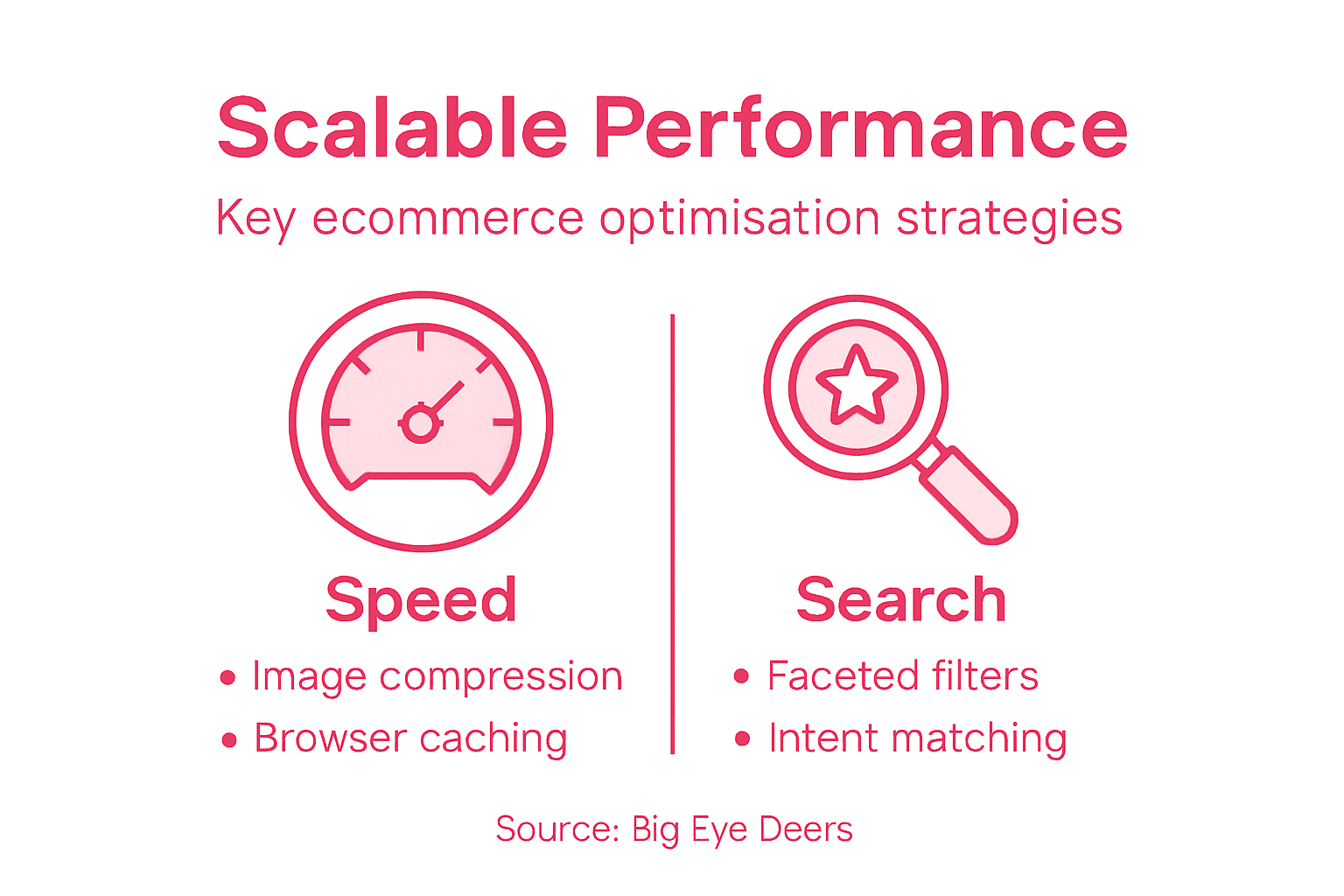
Develop a comprehensive search strategy that considers both technical performance and user experience. Implement faceted search options allowing customers to filter results by multiple attributes like price size colour or brand. Create clear intuitive navigation pathways that guide users efficiently through your product catalogue while maintaining fast and relevant search results.
Expert recommendation: Continuously monitor search analytics to understand user search patterns and iteratively improve your onsite search functionality based on real customer interaction data.
Step 5: Secure and verify your ecommerce platform
Protecting your ecommerce platform requires a comprehensive security strategy that safeguards customer data financial transactions and overall digital infrastructure. Your primary objective is implementing robust verification and protection mechanisms that build customer trust and prevent potential security breaches.
Begin by implementing rigorous identity verification protocols that authenticate both user and administrative access. This involves multi factor authentication systems advanced password management techniques and comprehensive user validation processes. Integrate secure login mechanisms that use combination authentication methods including biometric verification email confirmation and two step verification processes.
Establish a multilayered security approach that covers every potential vulnerability in your ecommerce ecosystem. Install advanced web application firewalls implement regular security patch management protocols and conduct frequent vulnerability assessments. Monitor your platform continuously for potential intrusion attempts using sophisticated threat detection tools that provide real time security intelligence. Encrypt all sensitive customer data including personal information payment details and transaction records using industry standard encryption protocols.
Develop a comprehensive compliance framework that addresses regulatory requirements specific to ecommerce platforms. This includes implementing GDPR compliance mechanisms ensuring secure data handling practices and maintaining transparent privacy policies. Create detailed incident response plans that outline precise steps for managing potential security breaches including customer communication protocols and technical remediation strategies.
Here is a summary of essential verification and security protocols for ecommerce platforms:
| Security Layer | Key Protocols | Main Benefit |
|---|---|---|
| Identity Verification | Multi-factor authentication | Prevents unauthorised access |
| Data Encryption | Advanced encryption standards | Protects sensitive data |
| Threat Detection | Real-time monitoring tools | Early breach identification |
| Compliance Management | GDPR and incident planning | Maintains legal requirements |
Expert recommendation: Conduct quarterly comprehensive security audits and penetration testing to proactively identify and address potential vulnerabilities before they can be exploited.
Build a Scalable Ecommerce Platform Built for Growth
Scaling your ecommerce site to meet increasing demand while delivering a seamless user experience is a challenge many retailers face. The article highlights vital steps such as defining scalable architecture, employing thoughtful UX design with Figma, robust hosting solutions, optimising onsite search, and enforcing strong security. If you are aiming to address these crucial pain points and build an ecommerce platform that supports rapid growth and high performance, expert guidance is essential.
At Big Eye Deers, we specialise in designing and building scalable ecommerce stores using Magento and Shopify tailored for growing and enterprise retail brands. Our approach incorporates proven architecture principles, collaborative UX planning with Figma, advanced integrations, and ongoing security that aligns perfectly with the strategic steps detailed in the article. We also enhance onsite product discovery through intelligent search implementations and support consistent user experiences across all devices.

Ready to future-proof your online store for sustainable growth and exceptional performance? Visit Big Eye Deers now and explore how our experienced team can help you architect, build, and support a secure and scalable ecommerce platform that meets your evolving business needs.
Frequently Asked Questions
How can I define my ecommerce platform requirements for scalability?
To define your ecommerce platform requirements for scalability, assess your current business needs and identify potential growth scenarios. Create a detailed plan that evaluates transaction handling, catalogue expansion, integration across channels, and user experience.
What steps should I take to plan the user experience and architecture?
Begin by mapping out the user journey using design tools to create visual blueprints. Focus on building wireframes that illustrate the user flow from product browsing to checkout, ensuring they are responsive across devices.
How do I implement robust hosting and integrations for my ecommerce site?
Select a cloud hosting provider that offers automated scaling and security features. Ensure your hosting solution integrates smoothly with essential services like payment gateways and inventory management systems for efficient data flow.
What performance optimisation techniques should I use for my ecommerce platform?
Implement strategies such as image compression and browser caching to enhance page load speeds. Regularly monitor performance metrics to identify areas for improvement, aiming to reduce loading times by at least 20%.
How can I secure and verify my ecommerce platform effectively?
Establish a comprehensive security strategy that includes multi-factor authentication and encryption of sensitive data. Conduct quarterly security audits to proactively identify potential vulnerabilities in your system, ensuring the protection of customer data.
What compliance measures should I implement for my ecommerce platform?
Ensure your ecommerce platform adheres to regulatory standards by implementing mechanisms for data protection, such as GDPR compliance. Develop an incident response plan to manage any security breaches, clearly outlining the steps for customer notifications and technical resolutions.
Recommended



Adobe Commerce (Magento)
Formerly known as Magento, Adobe Commerce is built for complex catalogues, integrations, and long term growth. We design and develop stable, scalable stores that support demanding eCommerce requirements, including multi-store setups, complex pricing, and Hyva based performance improvements.

Bespoke Build
We design and build custom eCommerce platforms for businesses with complex workflows, integrations, or non standard requirements. Built from scratch around your business needs using Laravel and modern architectures.

Working with brands across the UK from our offices in Cardiff and Exeter, you deal directly with a senior team of designers and developers specialising in Shopify, Magento, WordPress and bespoke eCommerce platforms.
We focus on commercial outcomes. Better conversion rates, strong SEO foundations and eCommerce platforms that continue to improve long after launch.