What Is B2C Ecommerce? Impact on Retail Brands

Managing an online store can feel overwhelming when myths about B2C ecommerce cloud the real opportunities. Many British retailers worry that going digital means massive investment or complex technology, yet the latest platforms give even small and medium brands access to user-friendly technologies and wider markets. This article uncovers the truth behind common misconceptions and outlines practical features and models to support Ecommerce managers looking for scalable solutions with Magento or Shopify.
Table of Contents
- B2C Ecommerce Defined And Common Myths
- Types Of B2C Ecommerce Models
- Key Features Of B2C Retail Platforms
- Buyer Journey And User Experience Essentials
- Risks, Compliance, And Data Protection
Key Takeaways
| Point | Details |
|---|---|
| B2C Ecommerce Accessibility | B2C ecommerce platforms are now available for businesses of all sizes, allowing small and medium enterprises to compete effectively in digital markets. |
| Diverse Ecommerce Models | Each B2C ecommerce model, such as direct sales and dropshipping, offers unique advantages and scalability options for retailers. |
| Critical Platform Features | Successful B2C ecommerce platforms must integrate features like mobile responsiveness and secure payment systems to enhance user experience. |
| Regulatory Compliance Importance | Robust data protection and compliance with regulations like GDPR are essential for building consumer trust and protecting business interests. |
B2C Ecommerce Defined and Common Myths
Business-to-Consumer (B2C) ecommerce represents the direct electronic exchange of goods and services between companies and individual shoppers through digital platforms. Electronic commerce mechanisms have transformed traditional retail by enabling seamless online transactions that connect businesses directly with end consumers.
B2C ecommerce encompasses multiple transaction types and digital interactions:
- Online retail product purchases
- Digital service subscriptions
- Virtual product downloads
- Online booking and reservation systems
- Direct-to-consumer brand interactions
Many retailers misunderstand B2C ecommerce, believing it requires complex technological infrastructure or massive investment. These misconceptions often prevent smaller businesses from exploring digital sales channels. Technological advancements have actually democratised online selling, making digital storefronts accessible for businesses of all sizes.

Common B2C ecommerce myths include:
The table below summarises how common B2C ecommerce myths compare to the current reality facing retailers:
| Myth | Reality | Business Implication |
|---|---|---|
| Only large businesses can sell online | Platforms suit firms of all sizes | SMEs can compete in digital markets |
| High setup costs are a barrier | Affordable solutions are widespread | Lower financial risk for new entrants |
| Shoppers prefer in-person retail | Online purchases continue to rise | Expanding reach boosts sales growth |
| Digital sales lack security | Enhanced protections are now standard | Increased trust encourages transactions |
- Online stores are only for large corporations
- Setting up digital sales channels is prohibitively expensive
- Customers prefer in-person shopping experiences
- Digital transactions are inherently less secure
In reality, modern ecommerce platforms offer scalable solutions that can be customised for different business needs. Small and medium enterprises can now leverage user-friendly technologies to create professional online presences and reach broader markets.
Pro tip: Start small by selecting an adaptable ecommerce platform that grows with your business, focusing first on creating a clear, user-friendly online shopping experience.
Types of B2C Ecommerce Models
B2C ecommerce encompasses diverse business models that enable companies to sell products and services directly to consumers through digital channels. Common ecommerce business models provide unique strategies for online retail, each with distinct operational approaches and market positioning.
The primary B2C ecommerce models include:
- Direct Sales Model: Brands selling products through their own online storefront
- Dropshipping Model: Retailers selling products without holding physical inventory
- Marketplace Model: Platforms facilitating transactions between multiple sellers and consumers
- Subscription Model: Businesses offering recurring product or service deliveries
- Digital Product Model: Selling downloadable or digital-only products
Each model presents unique advantages for retailers seeking to expand their digital presence. Direct sales models provide complete control over customer experience and product presentation, allowing brands to build stronger relationships with consumers.
Key characteristics of these models vary significantly:
This table contrasts the leading B2C ecommerce models by key operational considerations:
| Model Type | Stock Management | Startup Investment | Typical Scalability |
|---|---|---|---|
| Direct Sales | Retailer holds all stock | Medium to high | High with growth investment |
| Dropshipping | Supplier manages inventory | Low | Scalable but supplier-dependent |
| Marketplace | Third-party sellers hold stock | Low | Rapid via platform expansion |
| Subscription | Forecasted stock held | Medium | Grows with subscriber base |
| Digital Product | No physical stock needed | Low | Instantly scalable globally |
- Inventory management requirements
- Initial capital investment
- Operational complexity
- Scalability potential
- Customer engagement strategies
The marketplace model, for instance, offers lower entry barriers for new businesses, enabling them to leverage existing platform infrastructure and reach broader audiences without substantial upfront investments.
Pro tip: Evaluate your business capabilities, target market, and growth objectives carefully when selecting a B2C ecommerce model to ensure alignment with your long-term strategic vision.
Key Features of B2C Retail Platforms
Successful B2C ecommerce platforms require a comprehensive suite of features that enable seamless online shopping experiences. High-performance ecommerce platforms integrate multiple sophisticated technologies to meet evolving consumer expectations and business requirements.
Critical features of modern B2C retail platforms include:
- Product Catalog Management: Comprehensive digital product presentation
- Advanced Search Functionality: Intuitive product discovery mechanisms
- Personalised User Experience: AI-driven recommendation systems
- Secure Payment Gateways: Multiple transaction method integrations
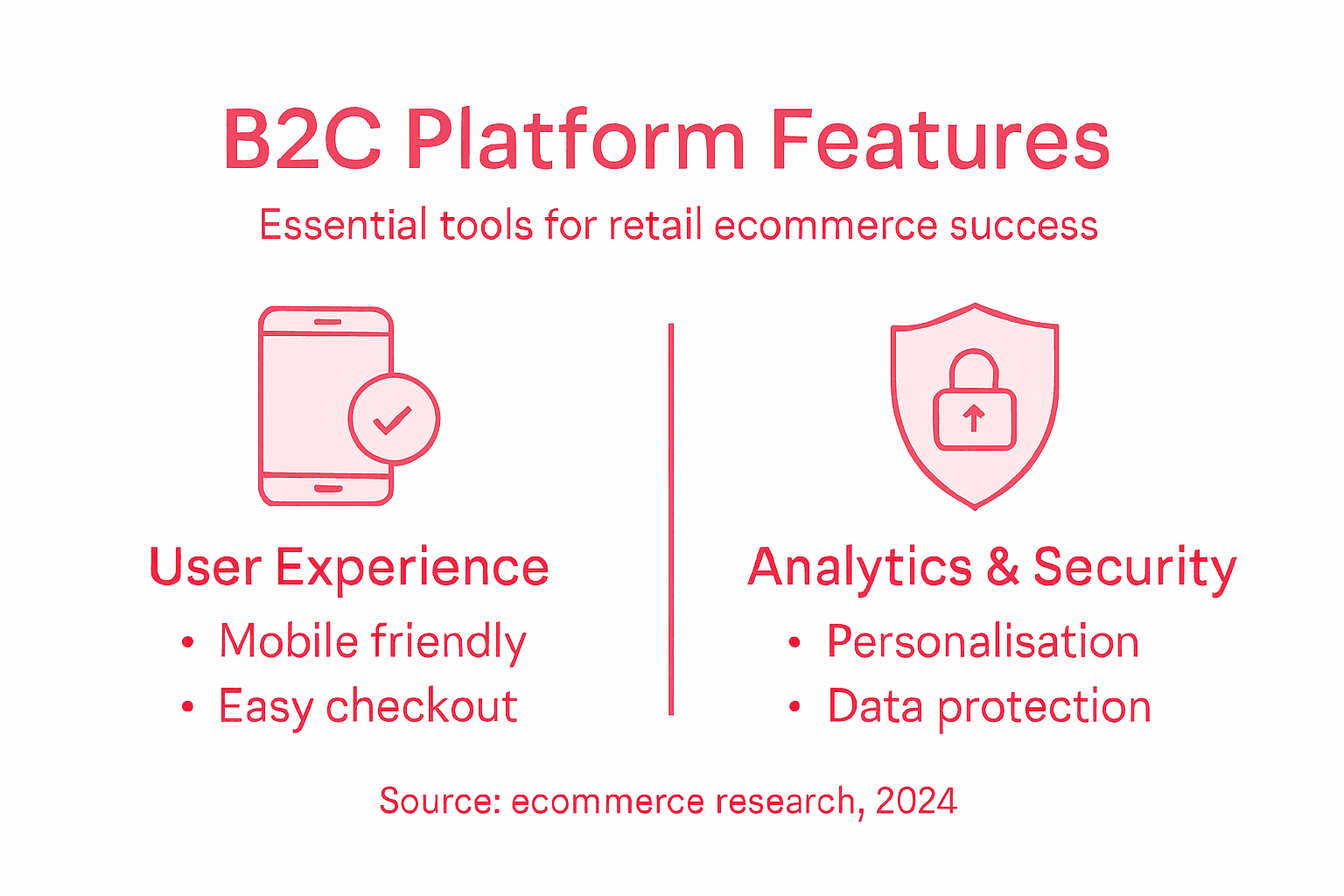
- Mobile-Responsive Design: Seamless cross-device shopping experiences
The technological infrastructure supporting these platforms goes beyond basic transactional capabilities. Mobile optimization has become particularly crucial, with increasing numbers of consumers preferring smartphone shopping experiences. This requires responsive design that adapts seamlessly across different device types and screen sizes.
Key technological components that define modern B2C retail platforms encompass:
- Scalable cloud-based architecture
- Real-time inventory synchronisation
- Advanced analytics and reporting
- Multichannel integration capabilities
- Robust security protocols
Data-driven personalisation represents another significant advancement, enabling retailers to create tailored shopping experiences that increase customer engagement and conversion rates. By leveraging machine learning algorithms, platforms can now predict consumer preferences and dynamically adjust product recommendations.
Pro tip: Prioritise platforms offering flexible integration capabilities and comprehensive analytics to ensure your ecommerce solution can adapt and grow with your business.
Buyer Journey and User Experience Essentials
The B2C buyer journey represents a complex, multi-stage process where consumers navigate from initial awareness to final purchase decision. B2C buyer journey mapping enables businesses to understand and optimise customer interactions across critical touchpoints.
The typical buyer journey encompasses several distinct phases:
- Awareness Stage: Initial problem recognition and information gathering
- Consideration Stage: Researching potential solutions and comparing options
- Decision Stage: Evaluating specific product details and making purchase
- Retention Stage: Post-purchase experience and potential repeat engagement
- Advocacy Stage: Potential brand recommendation and ongoing loyalty
Customer experience design requires meticulous attention to each journey stage. Emotional engagement plays a crucial role, with consumers seeking seamless, personalised interactions that address their specific needs and pain points.
Key elements that significantly impact user experience include:
- Intuitive website navigation
- Clear product information
- Transparent pricing structures
- Responsive customer support
- Streamlined checkout processes
Technological advancements have transformed traditional buyer journeys, introducing sophisticated personalisation mechanisms that adapt in real-time to individual consumer preferences. Machine learning algorithms now enable dynamic content recommendations and predictive shopping experiences that feel uniquely tailored to each user.
Pro tip: Regularly map and analyse your customer journey, using analytics to identify and eliminate potential friction points that might discourage potential purchases.
Risks, Compliance, and Data Protection
B2C ecommerce businesses face increasingly complex regulatory landscapes that demand robust data protection and consumer safety strategies. Digital markets compliance has become a critical priority for online retailers navigating stringent legal requirements.
Key compliance challenges for B2C ecommerce platforms include:
- Protecting customer personal information
- Ensuring transparent data handling practices
- Implementing secure payment systems
- Maintaining comprehensive consent mechanisms
- Managing cross-border data transfer regulations
Smaller businesses often struggle with compliance, viewing regulatory requirements as administrative burdens. Regulatory complexity means that organisations must invest significant resources in understanding and implementing comprehensive data protection strategies.
Critical areas of legal risk management involve:
- General Data Protection Regulation (GDPR) compliance
- Cybersecurity infrastructure protection
- Consumer rights and transparency
- Payment card industry data standards
- Age verification and consent mechanisms
The evolving regulatory environment requires continuous adaptation. Proactive risk management involves regular audits, staff training, and implementing robust technological safeguards that protect both customer data and business interests.
Pro tip: Develop a comprehensive data protection strategy that goes beyond minimum legal requirements, treating customer data privacy as a fundamental business value.
Unlock Your Retail Brand’s Potential with Expert B2C Ecommerce Solutions
The article highlights key challenges in B2C ecommerce such as the need for secure payment systems, seamless user experiences, and scalable digital sales models like direct sales and marketplaces. Many retail brands struggle with complex technology, high setup costs, and creating personalised buyer journeys that drive conversion and retention. If your business is aiming to overcome these hurdles and thrive in competitive online markets using platforms like Magento or Shopify, then expert guidance is essential.
Big Eye Deers specialises in designing and building high-performing online stores tailored to your unique needs. Our proven expertise in Magento Open Source, Adobe Commerce, and Hyvä frontends ensures your digital storefront is not only scalable and secure but optimised for outstanding user experiences and maximum sales growth. Benefit from our strategic use of tools like Klaviyo for lifecycle marketing and Klevu for enhanced product discovery that directly address the pain points of modern B2C ecommerce.
Enhance your ecommerce journey now by partnering with a UK-based specialist who understands the intricacies of compliance, data protection, and buyer engagement. Discover how our solutions empower retail brands to build trusted, high-converting online platforms by visiting Big Eye Deers.
Experience the difference professional ecommerce design and support can make.
Ready to transform your online retail experience and drive sustainable growth Get expert support tailored for B2C ecommerce success Visit Big Eye Deers today and take the first step towards a secure and scalable online store customised for your brand.
Frequently Asked Questions
What is B2C ecommerce?
B2C ecommerce, or Business-to-Consumer ecommerce, refers to the direct electronic exchange of goods and services between companies and individual consumers through digital platforms.
What are some common myths about B2C ecommerce?
Common myths include the belief that only large businesses can sell online, that setup costs are prohibitively expensive, that customers prefer in-person shopping, and that digital transactions are less secure.
What are the main types of B2C ecommerce models?
The primary B2C ecommerce models include Direct Sales, Dropshipping, Marketplace, Subscription, and Digital Product models, each with unique operational approaches and advantages.
How does technological infrastructure impact B2C ecommerce platforms?
Robust technological infrastructure enables B2C ecommerce platforms to offer essential features like mobile-responsive design, secure payment gateways, and advanced analytics, which enhance the overall user experience.
Recommended



Adobe Commerce (Magento)
Formerly known as Magento, Adobe Commerce is built for complex catalogues, integrations, and long term growth. We design and develop stable, scalable stores that support demanding eCommerce requirements, including multi-store setups, complex pricing, and Hyva based performance improvements.

Bespoke Build
We design and build custom eCommerce platforms for businesses with complex workflows, integrations, or non standard requirements. Built from scratch around your business needs using Laravel and modern architectures.
Working with brands across the UK from our offices in Cardiff and Exeter, you deal directly with a senior team of designers and developers specialising in Shopify, Magento, WordPress and bespoke eCommerce platforms.
We focus on commercial outcomes. Better conversion rates, strong SEO foundations and eCommerce platforms that continue to improve long after launch.